
Share


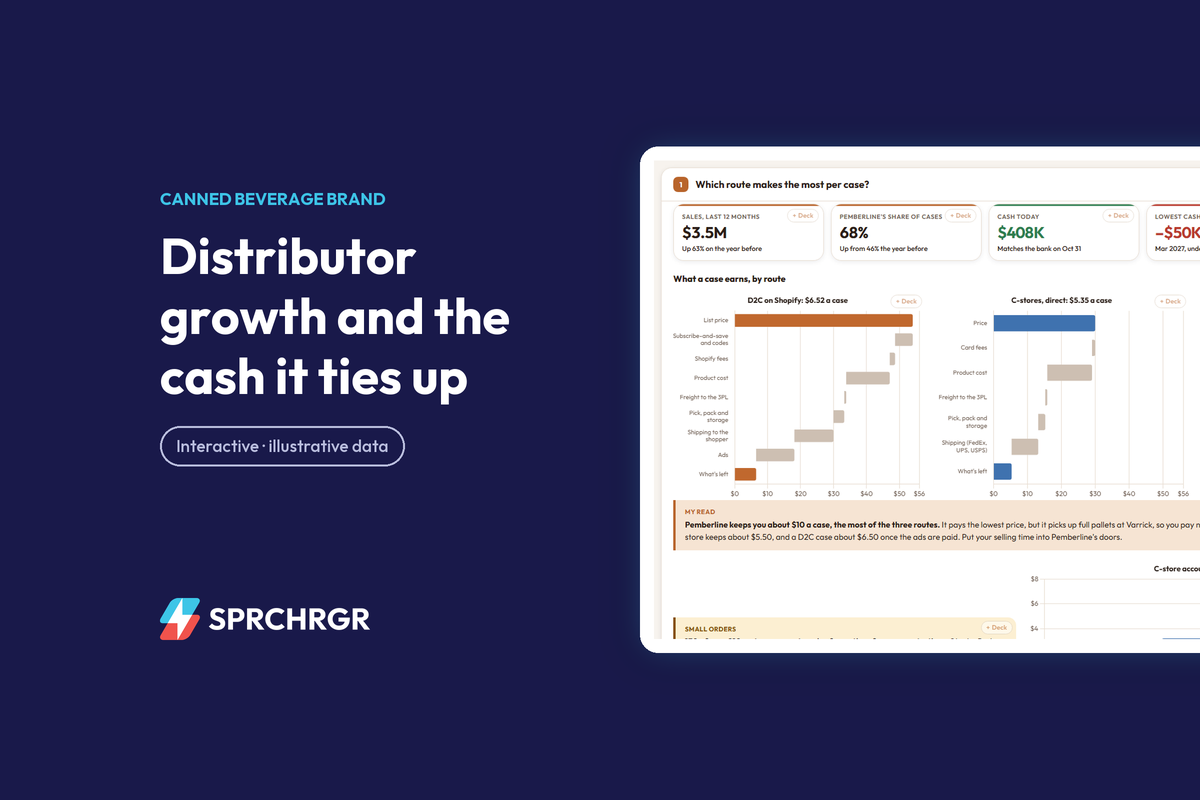
Built for: Founders of inventory brands selling $3M or more a year, with a distributor that's starting to drive the growth.
What it answers: Which route to the shelf earns the most per case, how much cash the growth ties up, what the trade shows bring in, and how big a credit line to set up before you need it.
See it live: Canned beverage demo · a made-up company with invented numbers
Landing a national distributor feels like the finish line. For most beverage brands it's where the cash trouble starts. The orders get bigger, the price per case drops, and the money shows up two months after the product leaves the dock.
Here's how I'd walk a founder through it, using a sample dashboard we built for a made-up canned cold-brew brand called Cinderwake. Eight people, four flavors in 11 oz cans, a co-packer that runs production and a 3PL that ships everything except the distributor's orders. It sold $3.5M in the last 12 months, up 63% on the year before.

Start with what a case earns
Cinderwake sells three ways. Shoppers buy on its Shopify site. About 200 c-stores, delis and independents order on its Shopify B2B portal and pay by card. And a national distributor, Pemberline, buys by the pallet on net 60.
Pemberline pays the lowest price, $24 a case against $30 from a c-store and about $49 from a shopper. Look at the price alone and you'd chase the shopper. The page lines the three up as waterfalls from price down to what's left.
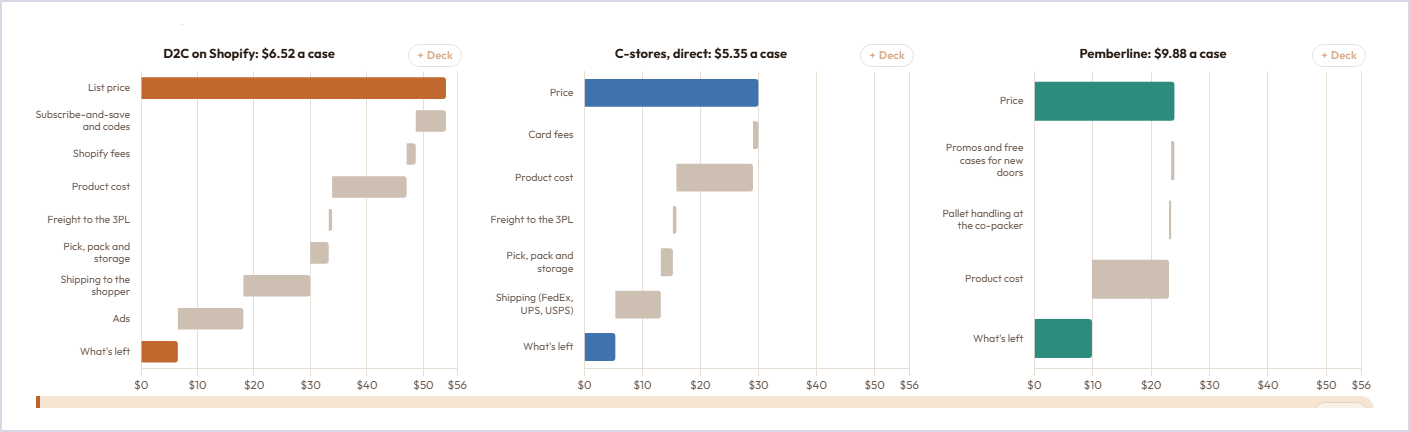
Pemberline picks up full pallets at the co-packer, so Cinderwake pays no freight, no pick and pack and no card fee on those cases. After a small promo allowance and free cases for new doors, it keeps about $10 a case. A D2C case keeps about $6.50 once shipping and ads are paid. A c-store case keeps about $5.50.
So the lowest price is also the best case. That's worth saying out loud to your team, because the sales effort usually goes the other way.
Know both margins for every channel
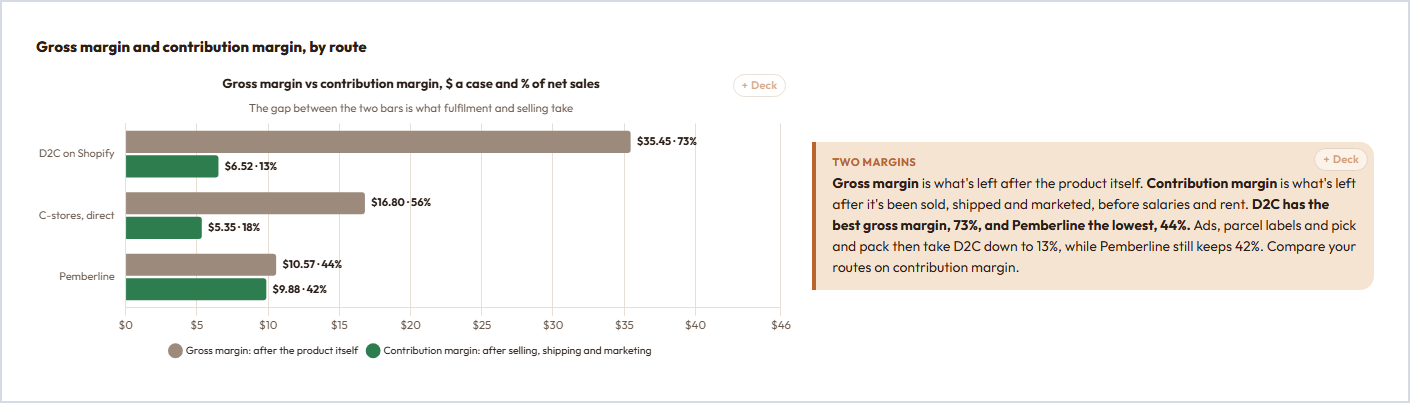
Two numbers run a product business. Gross margin is what's left after the product itself. Contribution margin is what's left after it's been sold, shipped and marketed, before salaries and rent.
On gross margin, D2C looks like the clear winner: about 73% of each sale, against 56% for a c-store case and 44% for Pemberline. Then you pay to reach the customer. Ads, parcel labels and pick and pack take D2C down to about 13%. Freight on small orders takes c-stores to about 18%. Pemberline has no freight, no 3PL and almost no marketing, so it holds on to about 42%.
The gap between the two bars is what fulfilment and selling cost on each channel. If you track one number by channel, make it contribution margin. It tells you where growth pays for itself.
Find the orders that lose money
The c-store number is an average, and it hides something. A one-case order still pays a full parcel label and a full pick-and-pack fee.
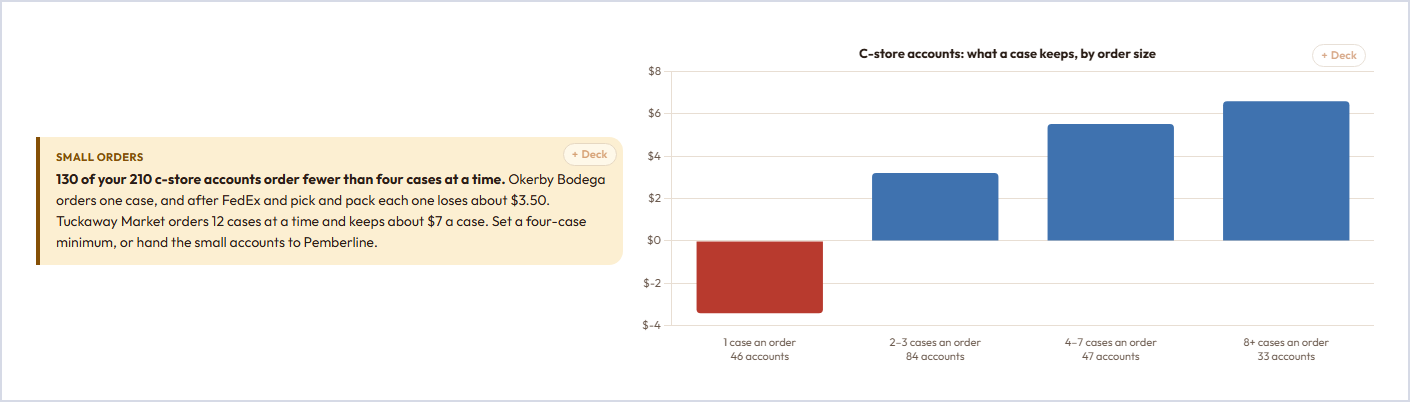
130 of Cinderwake's 210 direct accounts order fewer than four cases at a time. Okerby Bodega, a made-up corner store, orders one case at a time, and each one loses about $3.50 after FedEx. Tuckaway Market orders 12 at a time and keeps about $7 a case.
Every brand I've worked with has a few Okerbys. The fix is usually a four-case minimum, a freight charge on small orders, or handing those accounts to the distributor.
See where the growth is coming from
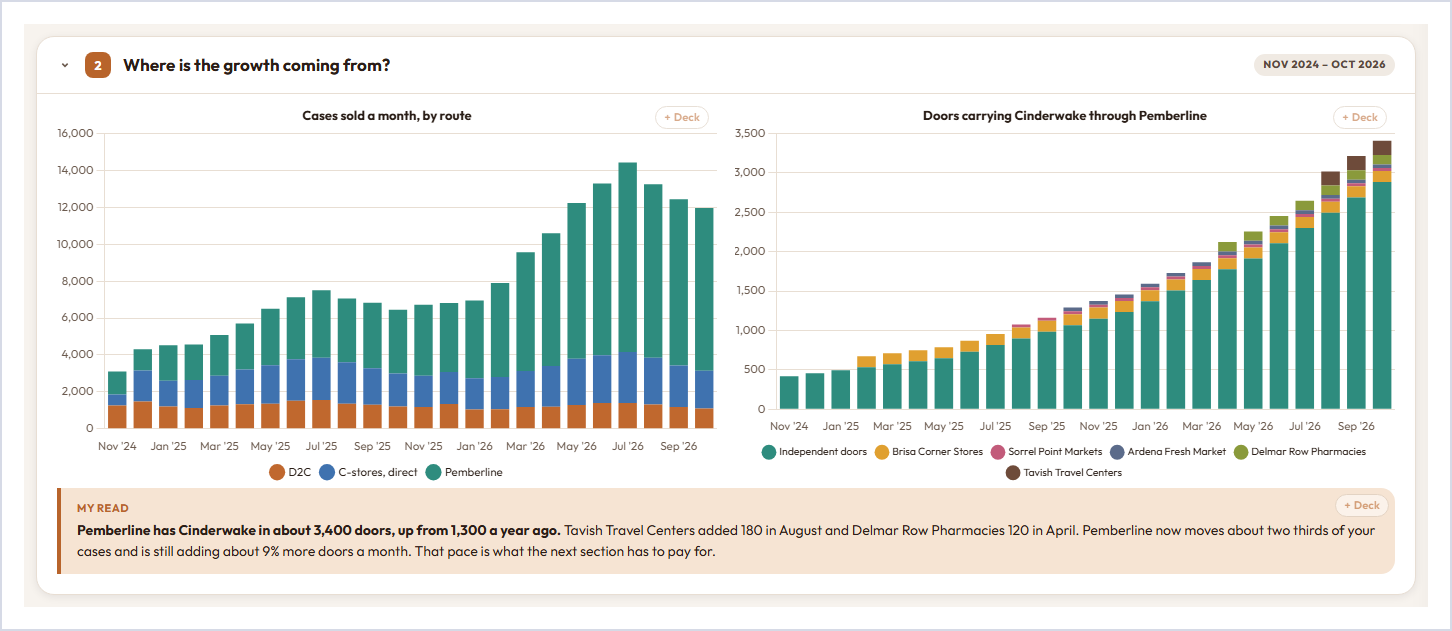
Pemberline now has Cinderwake in about 3,400 doors, up from 1,300 a year ago. Tavish Travel Centers added 180 in August and Delmar Row Pharmacies 120 in April. Pemberline moved 68% of the cases this year, up from 46% the year before, and it's adding about 9% more doors a month.
That's the good news. The rest of the page is about paying for it.
Count the days your cash is gone
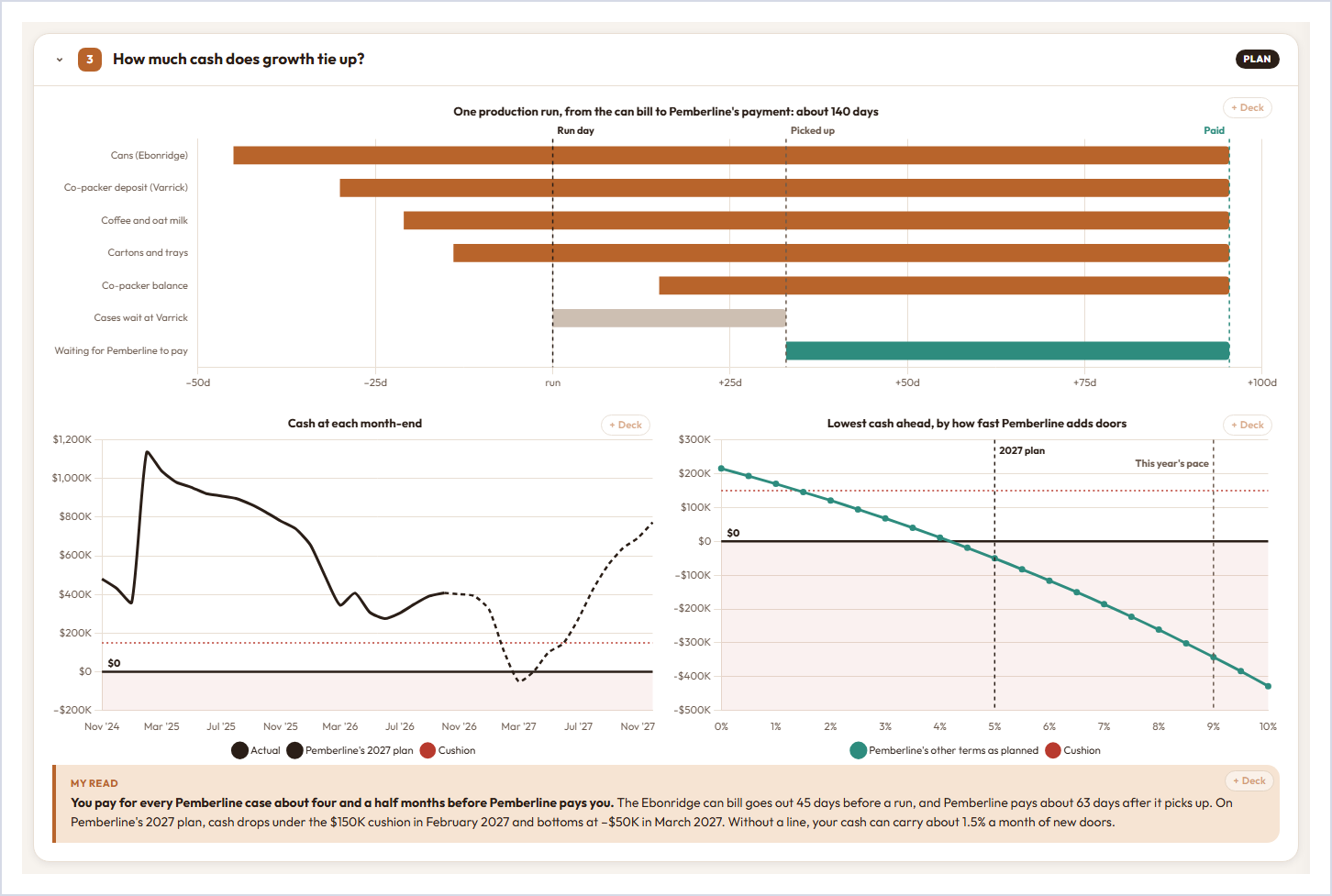
The top chart follows one production run. Cinderwake pays for printed cans about 45 days before the run, and for coffee, oat milk and the co-packer's deposit a few weeks before. The pallets sit at the co-packer for about a month before Pemberline picks them up, and Pemberline pays about 63 days after that. From the can bill to the check, about 140 days.
Cold brew adds one more wrinkle. The co-packer's summer line time books up, so summer stock gets built in March through May. That's when the cash goes out fastest.
Cinderwake had $408K in the bank at the end of October. Last June, after the spring build, it got down to $275K. On Pemberline's 2027 plan of about 5% more doors a month, cash drops under a $150K cushion in February and bottoms out around minus $50K in March. Then summer sales come in and it recovers fast.
The chart on the right is the one I'd pin to the wall. It shows the lowest cash ahead at every growth rate. Without a line of credit, Cinderwake's cash can carry about 1.5% a month of new doors. At this year's pace of 9% a month, the low point is closer to minus $340K.
Look at the trade shows the same way
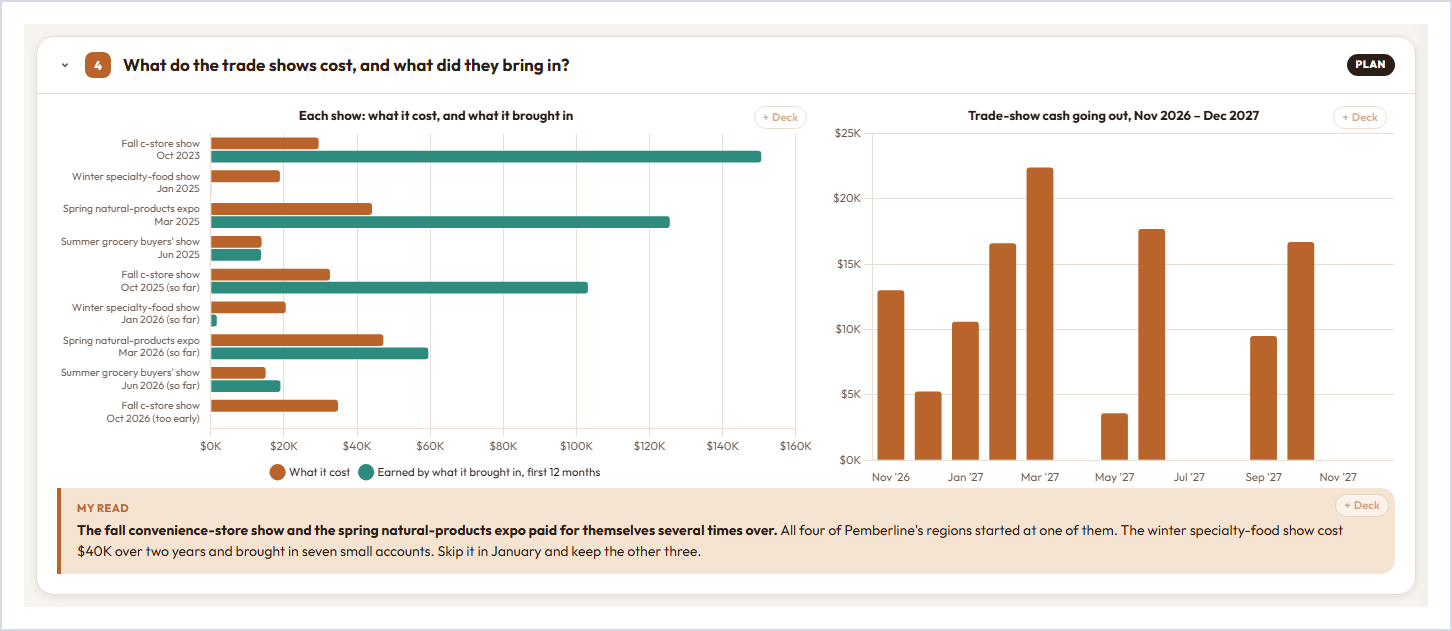
Cinderwake goes to four shows a year. Each bar compares what a show cost (booth, travel, samples and freight) with what the accounts and distributor regions it brought in earned in their first year.
All four of Pemberline's regions started at either the fall convenience-store show or the spring natural-products expo, and both paid back several times over. The winter specialty-food show cost about $40K over two years and brought in seven small accounts. I'd skip it in January and keep the other three.
Pick the moves
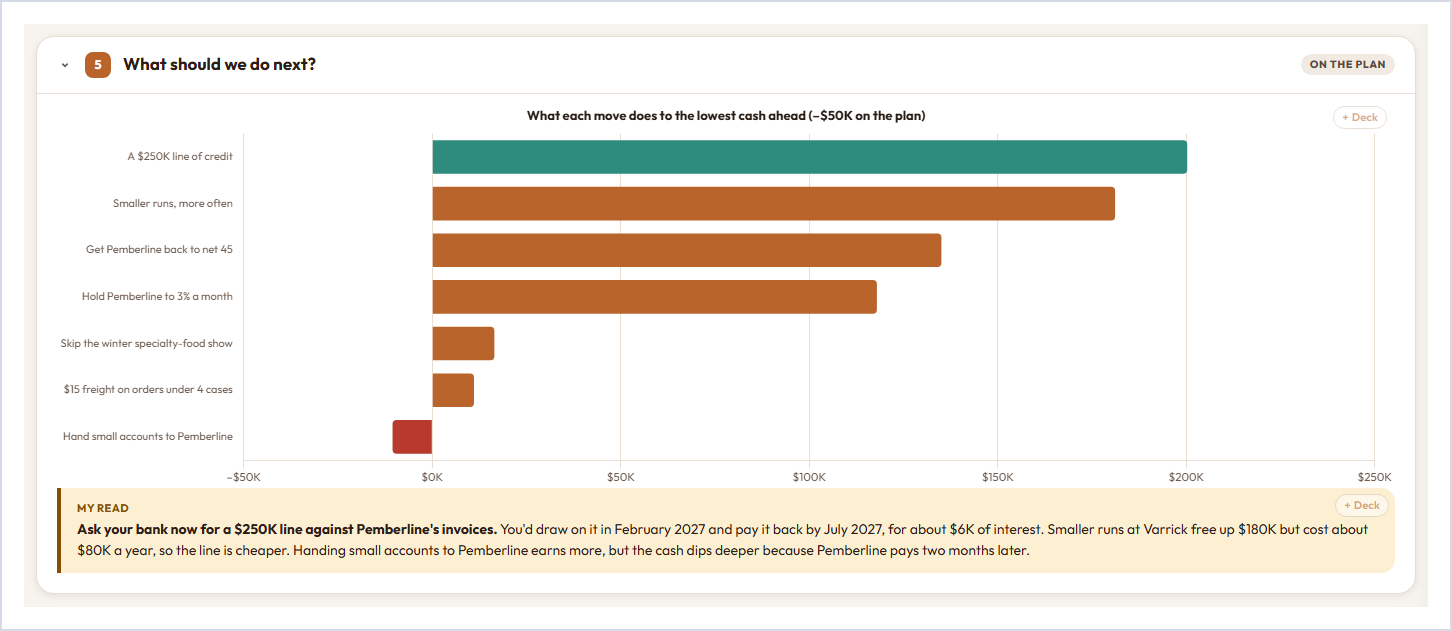
The last section shows what each move does to the low point. Here's how I'd read it:
- Open a $250K line now, against Pemberline's invoices and the stock. A bank lends on both, and the page shows the borrowing base sitting well above that at the low point. Cinderwake would draw in February and pay it back by July, for about $6K of interest.
- Smaller runs free up about $180K of cash but cost about $80K a year in short-run fees at the co-packer. The line is far cheaper.
- Asking Pemberline for net 45 again helps a lot, and you'll probably lose that negotiation. Worth asking anyway.
- Handing small accounts to Pemberline earns more over the year, and the cash dips a bit deeper, because Pemberline pays two months later than a card does.
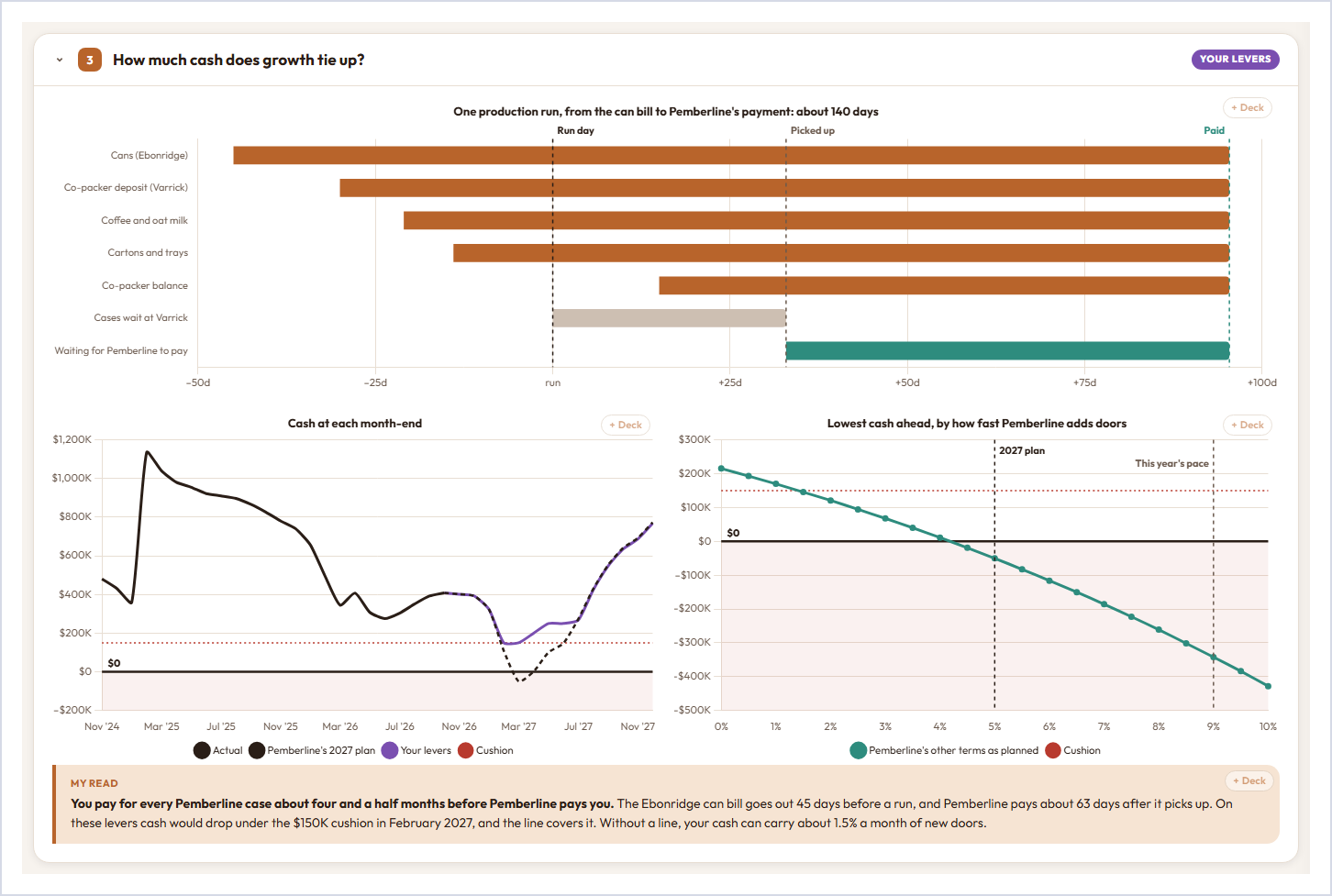
The levers on the page let you try any mix. Set the line to $250K and the cash never drops below the cushion. Push Pemberline's growth to 8% and the line you need nearly doubles, to about $450K.
The best time to ask a bank for a line is when you don't need it yet. In Cinderwake's case that's this month.
What it takes to get this on your own numbers
We connect read-only to your Shopify store, your 3PL, your bank and your accounting, close the books each month, and run the plan forward from the cash in the bank, with your co-packer's real payment terms and your distributor's real payment days. The per-case numbers, the low point and the line you need then update every month.
That's CFOptimize for Inventory Brands, and it starts with a free working-capital check on your own numbers: what each channel keeps per case, how much cash your next production runs tie up, and the credit line to set up before you need it. Book your free working-capital check.
Mark
Cinderwake is a made-up company, and every distributor, retailer, supplier and number in the dashboard and this post is invented. The cushion, the borrowing base and the credit terms are rules of thumb, not quotes, and nothing here is lending, legal or tax advice.
Share