Share


Built for: Executive directors, treasurers and finance committee chairs of home-delivered meals programs and other nonprofits paid per unit of service, roughly $1.5M to $15M a year, with the books in QuickBooks Online.
What it answers: What a meal really costs, what each funder pays and how late, how many seniors from the waitlist you can afford to add, and which moves pay for them.
See it live: Senior meals board review demo · a made-up organization with invented numbers
"Every meal we add costs more than we're paid for it. So how many more can we afford?"
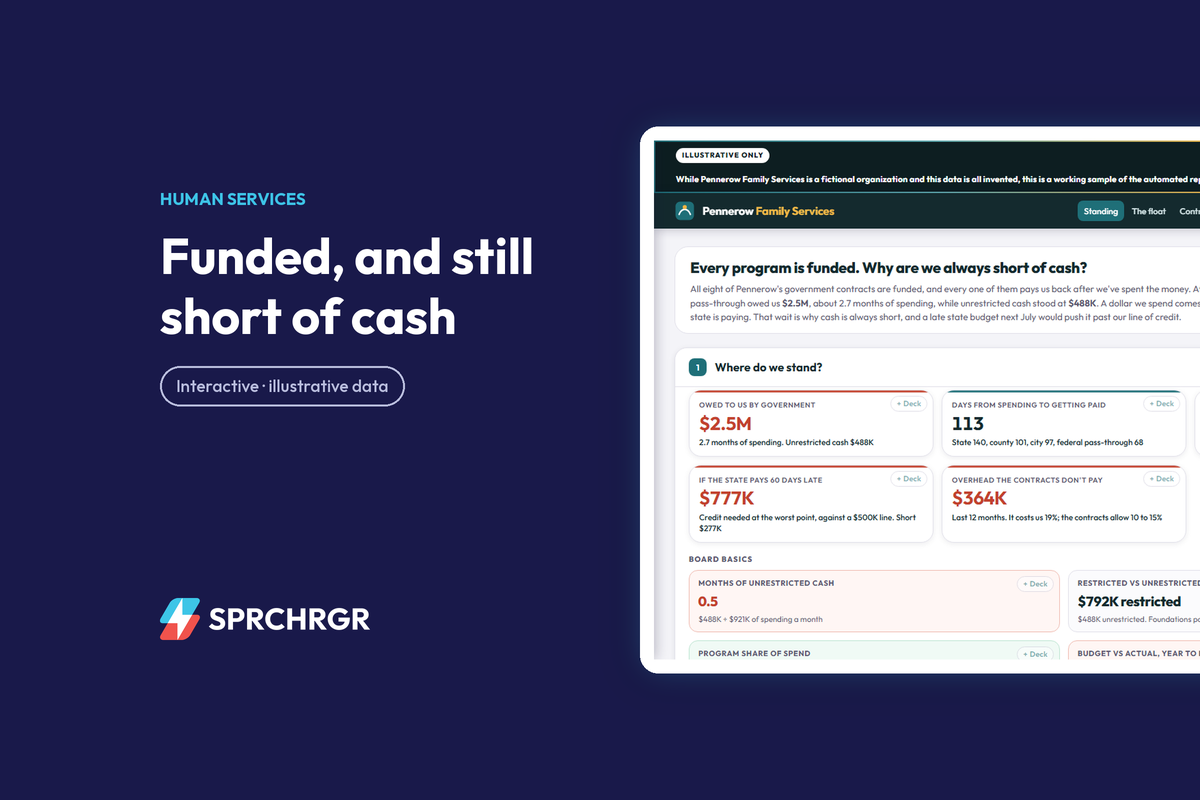
That's the question a board member asks once the waitlist report comes around again. It's the right question, and most finance teams can't answer it with the reports QuickBooks gives them. Here's how I'd walk an executive director and treasurer through it, using a sample dashboard we built for a made-up program called Wyndell Home Meals.
Wyndell spends about $3.8M a year delivering hot meals five days a week, with frozen packs for weekends. Most meals are paid for by the county aging agency at $7.90 each under the Older Americans Act. A regional health plan pays $9.25 a meal for frozen meals sent to members home from hospital. Seniors give what they can. Donors, foundations and a spring gala cover the rest. The waitlist is 141 seniors.
Start with what a meal really costs
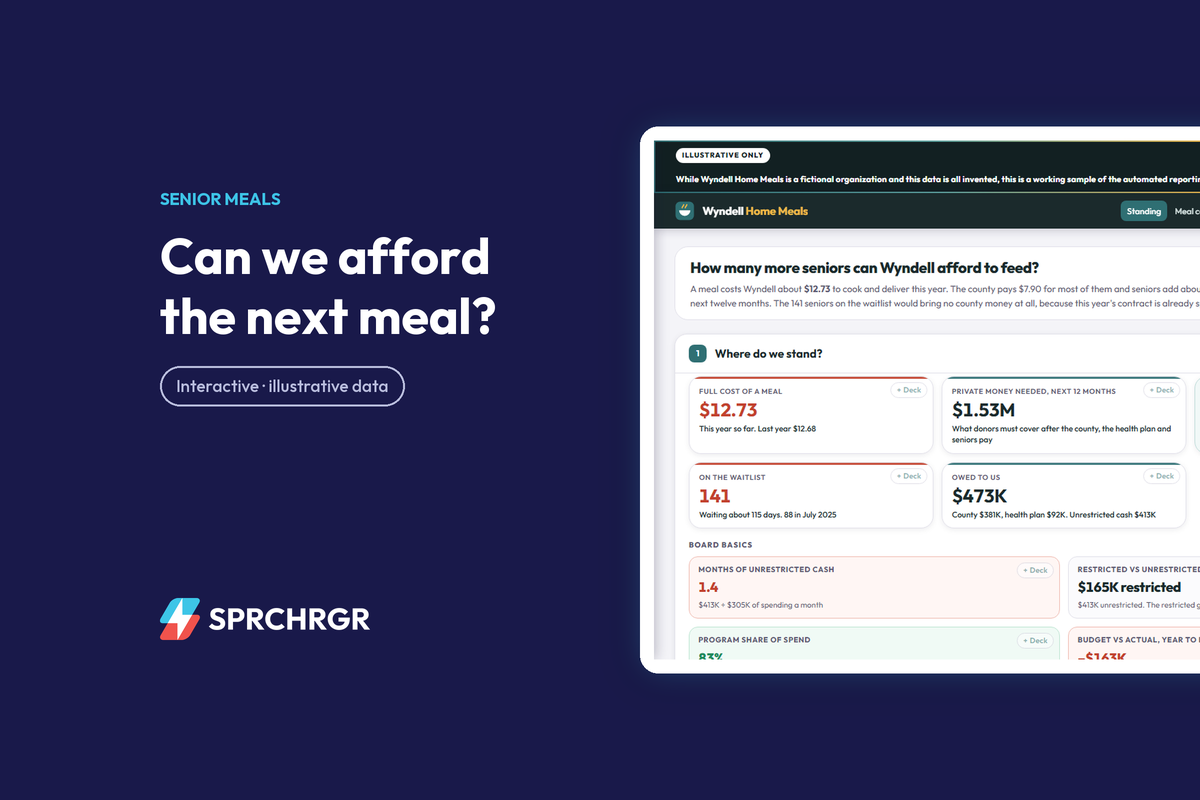
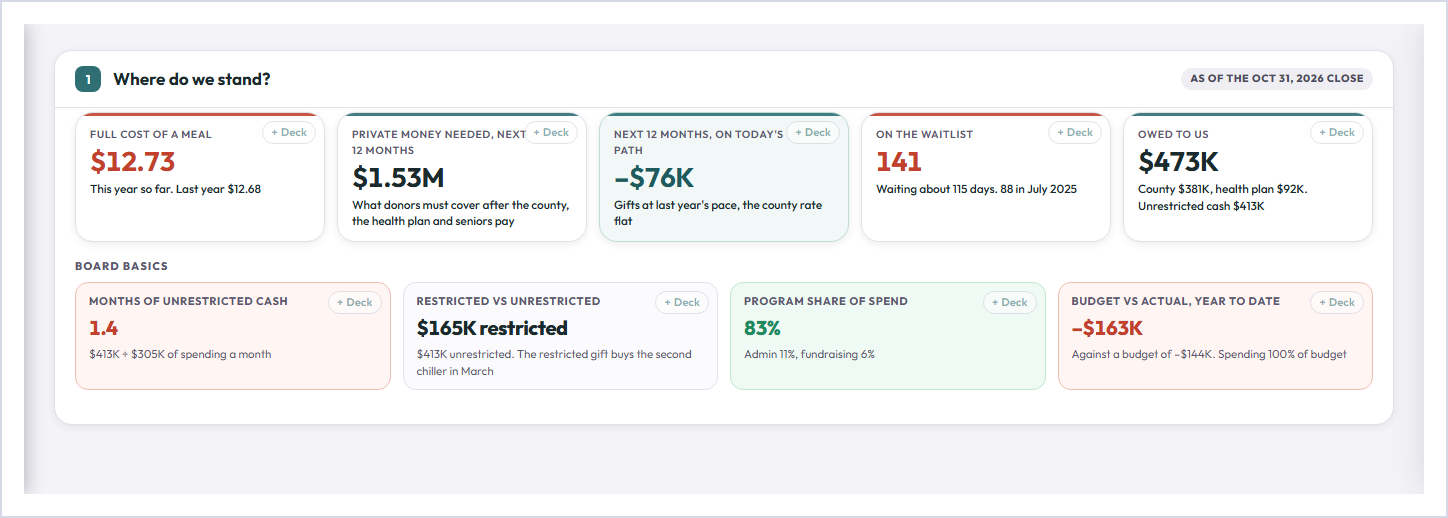
The first number on the page is the full cost of a meal: about $12.73 this fiscal year. That's every cost (food, kitchen, drivers and vans, intake, admin and fundraising) divided by the meals that went out the door. Boards often hear a food-cost number or a reimbursement rate and assume that's the cost. It isn't close.
Then split it by who pays. This is the chart I'd spend the most time on.
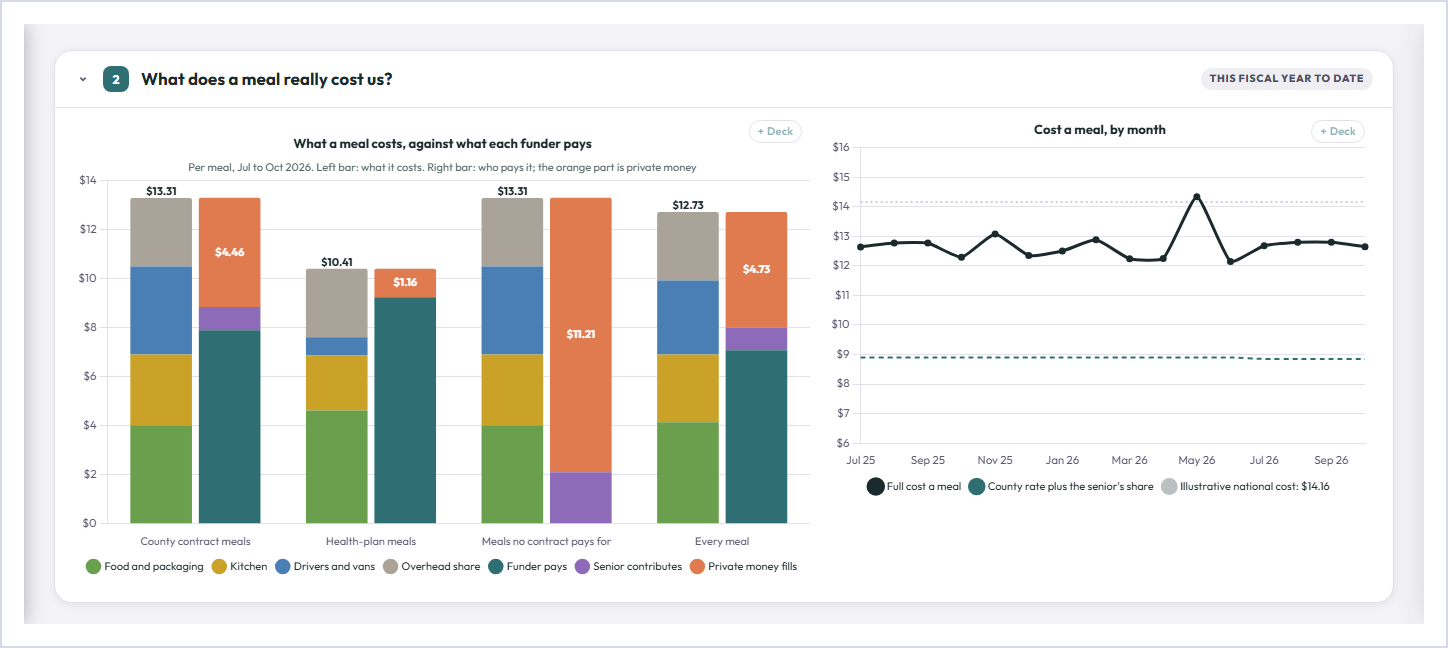
The left bar for each group is what the meal costs. The right bar is who pays it, and the orange piece is private money. A county meal costs about $13.31 once every cost is counted. The county pays $7.90 and the senior adds about 95 cents, so each one needs about $4.46 from donors. Meals no contract pays for need $11.21 each. The health-plan meals come closest to paying their way, $9.25 against $10.41, because they go out frozen once a week on one route.
Food is up 32 cents a meal this year after the new menu contract, about 8%. The county rate hasn't moved. A busier kitchen and admin spread over more meals absorbed most of it, which is why the full cost barely rose. That won't last if food keeps climbing.
Who pays, and how late
The second question is about cash, and it surprises boards more than the first.
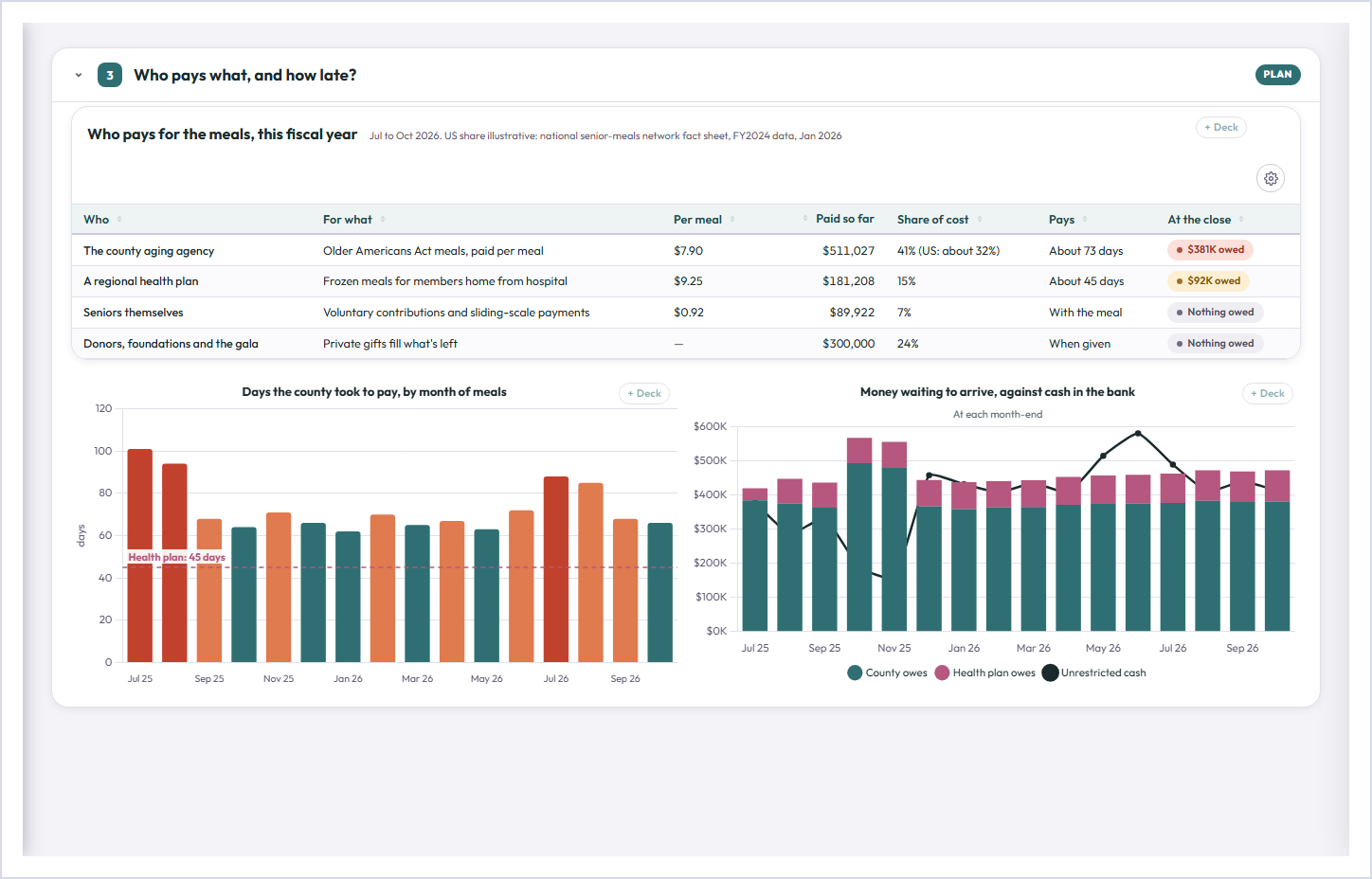
The county pays about 73 days after a month ends. Its July and August checks take longer, 88 and 85 days this year and longer the year before, while the new contract year gets signed. At the October close the county and the health plan owed Wyndell $473K. Unrestricted cash in the bank was $413K, about 1.4 months of spending. The money Wyndell is waiting for is bigger than the money it has.
There's a second catch in the contract. It covers 190,000 meals this year. At today's pace they run out in June, and the 2,500 or so meals after that bring in nothing from the county. QuickBooks shows the receivable. It doesn't show the cap, the lag by funder or the month it bites.
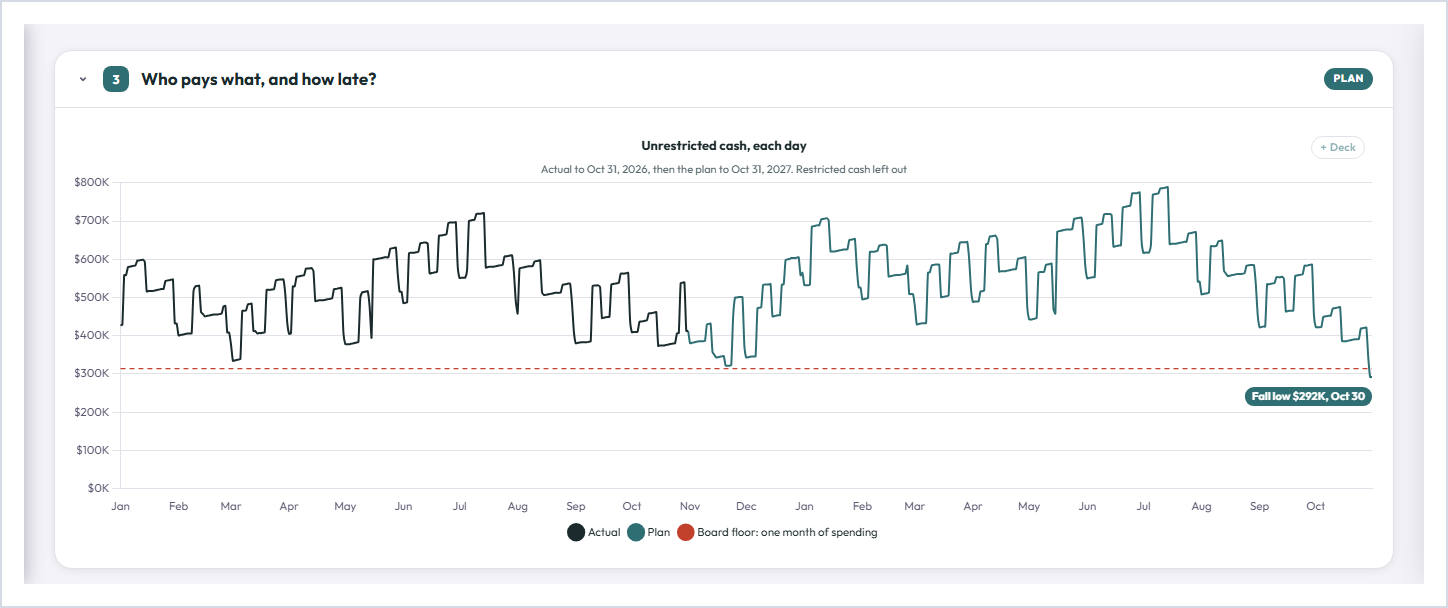
Put it together and the plan for the next twelve months ends about $76K short, with $1.53M of private money needed. Unrestricted cash bottoms at about $292K at the end of next October, under the board's floor of one month of spending ($314K). That's the July insurance renewal and a summer of payroll and food bills landing before the county's July and August checks arrive.
How many seniors from the waitlist
Now the question the board actually asked.
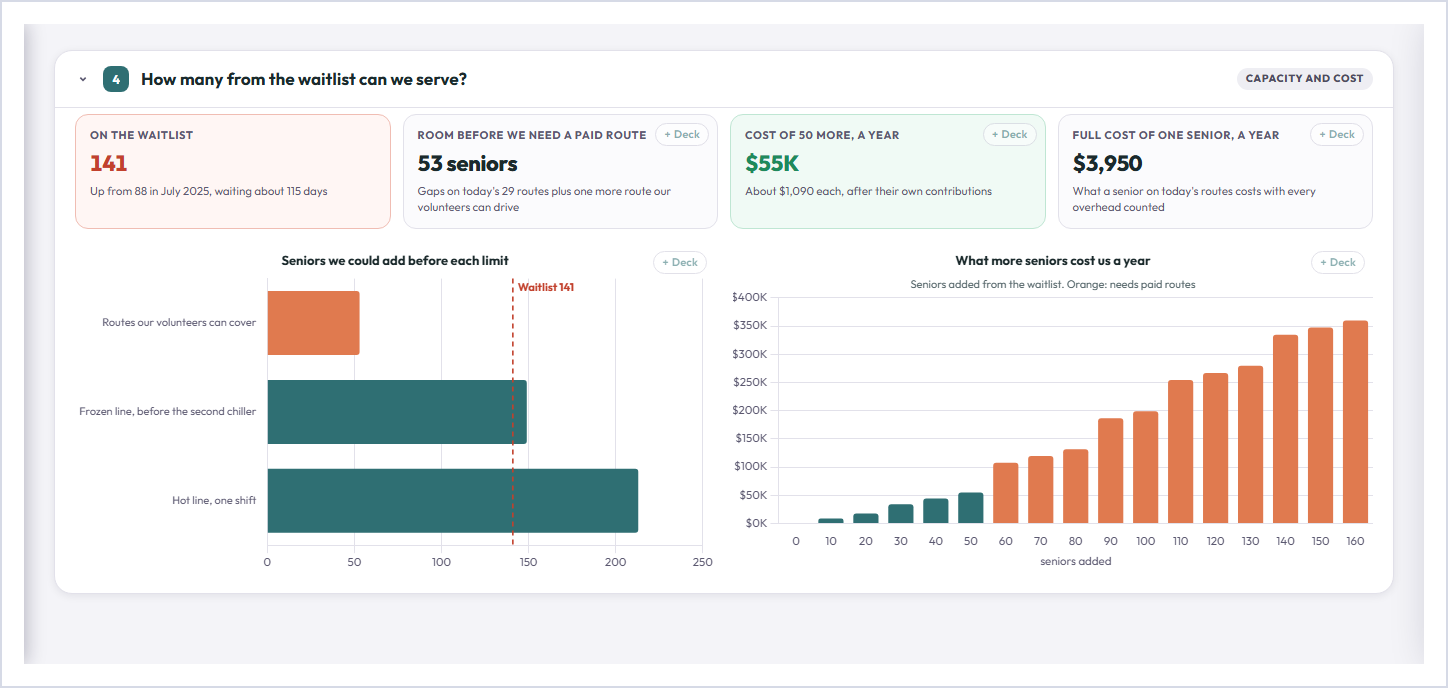
The full cost of a senior on today's routes is about $3,950 a year. But that's the wrong number for the waitlist decision. The next 53 seniors fit on routes Wyndell already runs, plus one more route its volunteers can drive, and the kitchen has room for 213 more hot meals a day. So adding them costs extra food, some kitchen overtime and volunteer mileage, less what they contribute. Fifty more seniors cost about $55K a year, roughly $1,090 each.
Past that, every new route of 28 seniors needs a paid driver and a van, and the cost jumps by about $53K a year. The drivers set the number, not the kitchen. That's the answer to "how many can we afford": 50 is cheap and fundable, and the 60th senior is a different decision.
What I'd do first
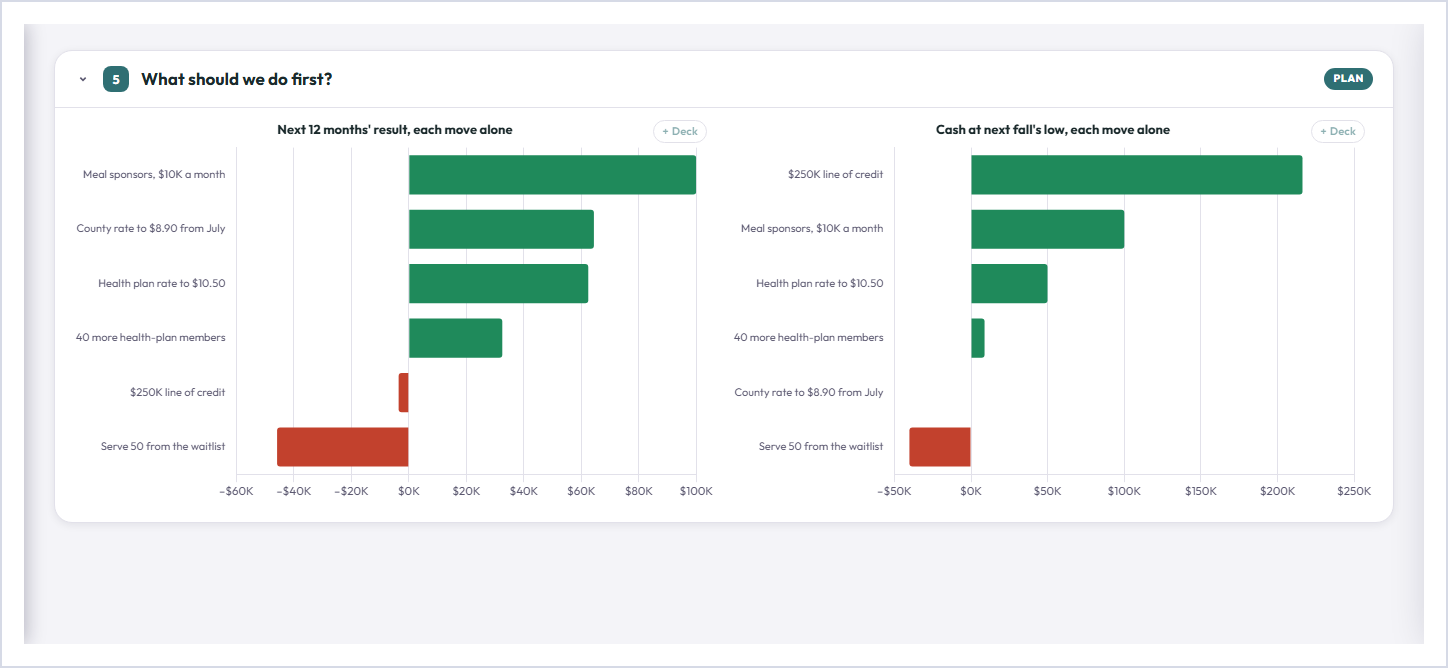
Raise the money for the 50 before you take them on. A meal-sponsor drive, donors who cover a senior's meals for $10K a month in all, brings in $100K by next October. Fifty seniors from January cost about $46K over the same months, so the drive pays for them about twice over.
Then go after the rates. Ask the county for $8.90 a meal when the contract renews in July. That's $64K by October and about $190K over a full year, and the meal counts on this page are the case for it. Push the health plan from $9.25 to $10.50 at its January renewal, worth about $62K. Its meals are the cheapest you make and the one funder close to paying full cost, so it's also worth asking for more members once the second chiller is in.
Last, put a $250K line of credit in place before July. You may never draw it. The point is that the county's summer delay shouldn't eat the reserve.
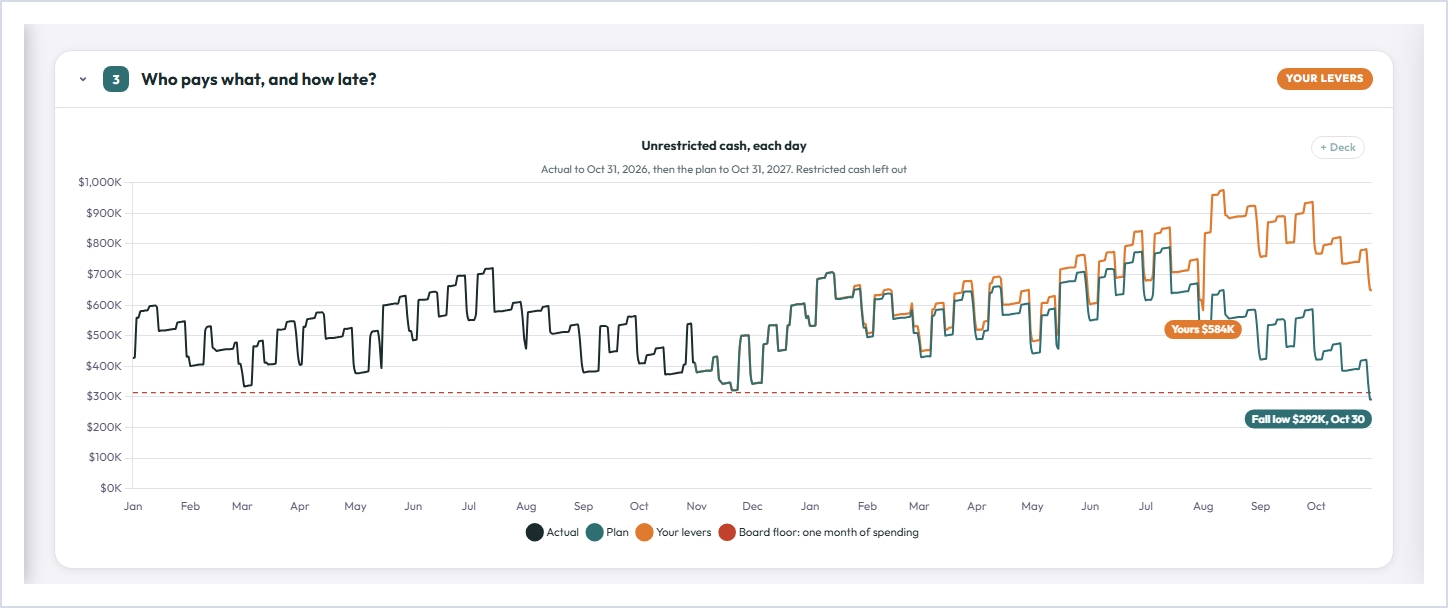
Together, with 50 more seniors served, the next twelve months end about $102K ahead instead of $76K short. Next fall's low is about $402K before the line and $584K with it, both above the floor.
Why not just do this in a spreadsheet
You could, once. The hard part is keeping it true every month. The cost per meal by funder needs QuickBooks classes set up as programs and functions, the meal counts you send the county, payroll from Gusto split between kitchen and drivers, and donor gifts from HubSpot. It needs someone who knows that the July check is always late and that the contract has a cap. And when a board member asks where $4.46 comes from, someone has to stand behind it.
That's what CFOptimize for Nonprofits does. We connect those systems, keep the data in a secure warehouse that refreshes itself, build the board view around the questions your board asks, and sit with your finance committee as a part-time CFO. Meet with our team.
Mark
Wyndell Home Meals is a made-up organization. The county agency and the health plan are generic, not real bodies, and every figure in the dashboard and this post is invented. Benchmarks on the page are illustrative and carry their source and year. The sample dashboard doesn't connect to QuickBooks, Gusto or HubSpot. Nothing here is investment, legal or tax advice.
Share