Founders of B2B and AI software companies with $1.5 to 3M of ARR who plan to raise a Series A in the next two or three quarters.
What an investor will check, whether your numbers already hold up, and when you need to start raising.
Open the interactive dashboard · a fictional company with invented numbers
Two quarters before an A, most founders ask me some version of "are we ready?" My answer usually depends less on the numbers than on how fast you can rebuild them when a partner's associate sends a forty-line diligence request on a Tuesday afternoon.
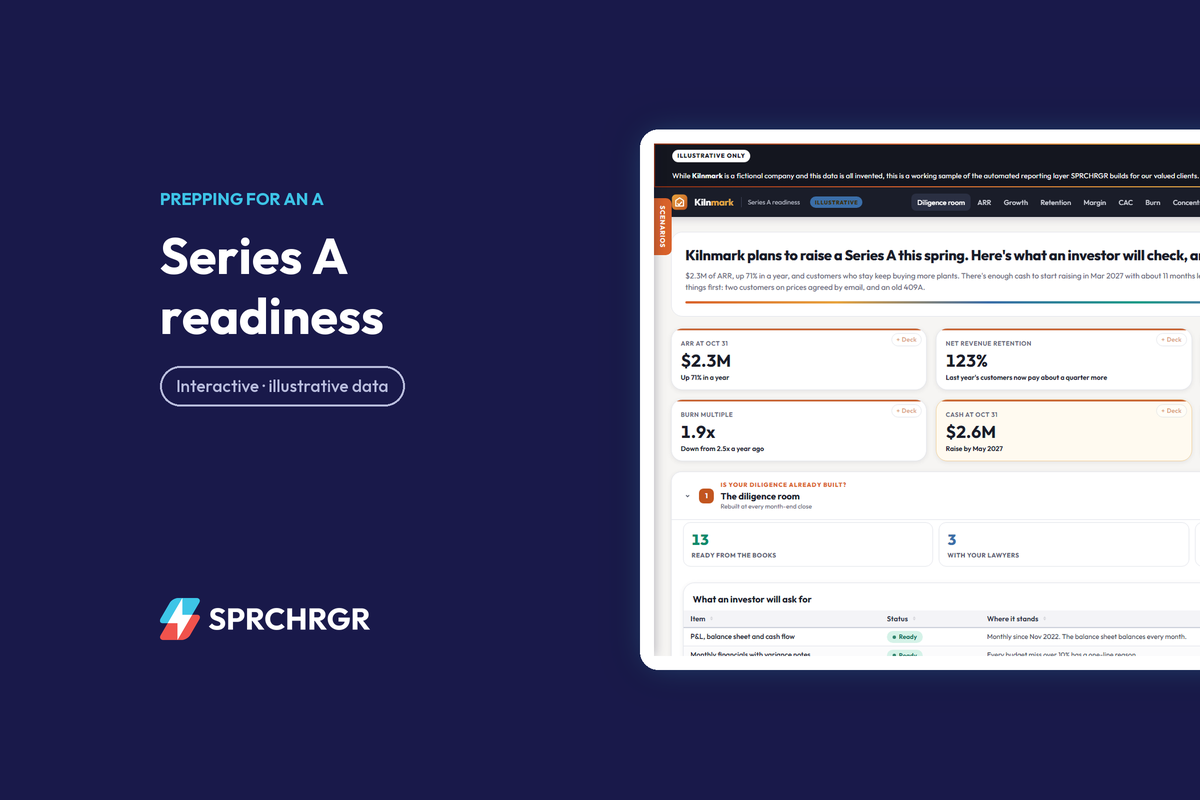
So we built a working sample around a fictional company, Kilnmark. It sells AI software that writes quality paperwork for mid-size manufacturers, priced per plant. It has $2.3M of ARR, up 71% in a year, and wants to raise this spring. Here's how I'd coach that founder through it.
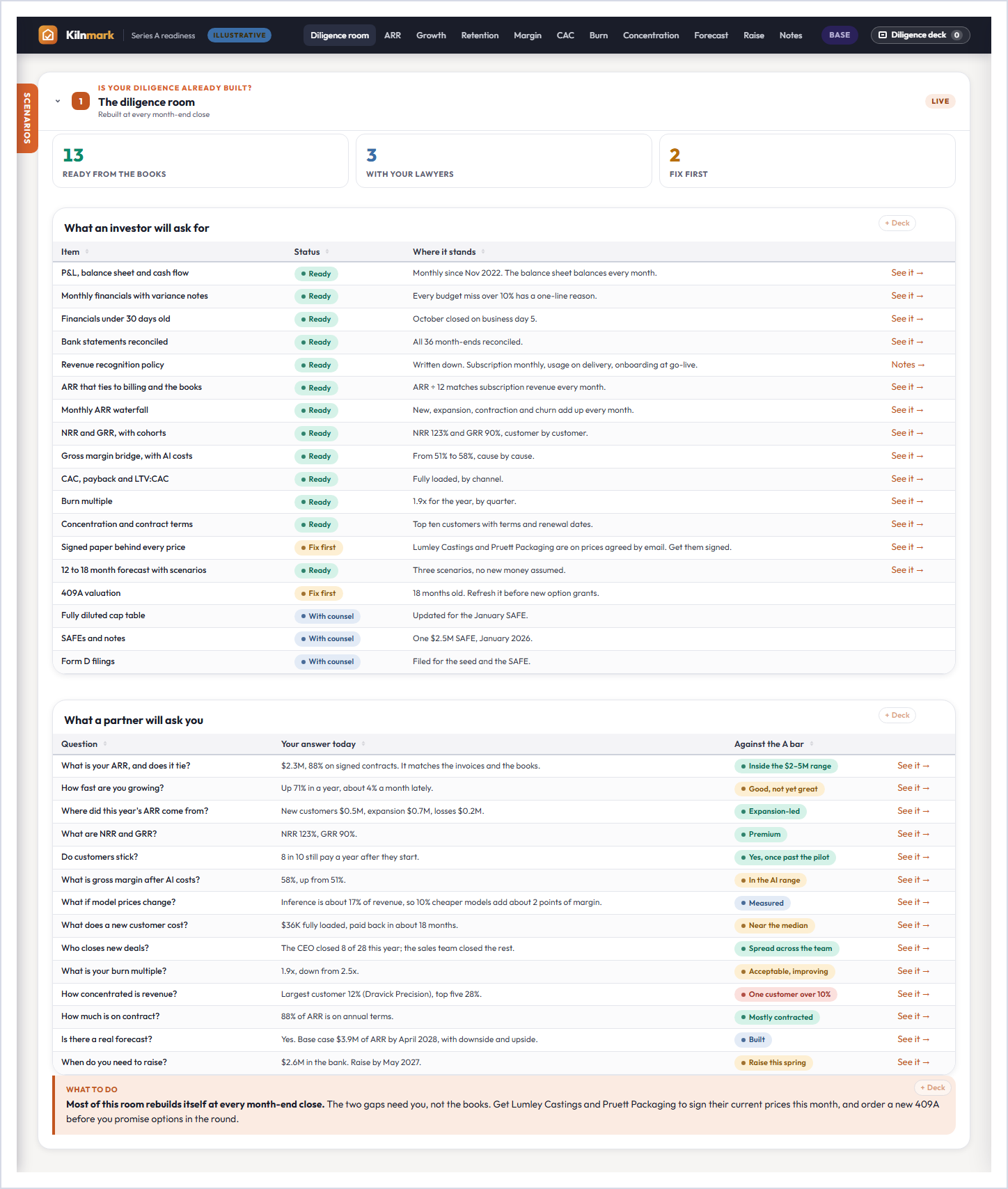
Most of the room should build itself
The first screen lists what an investor will ask for and where each item stands. Thirteen come straight from the books every month, three sit with the lawyers, and two need the founder. Two customers are paying prices agreed by email, and the 409A is 18 months old. Neither is hard to fix. Both look bad in week three of diligence, so fix them in November.
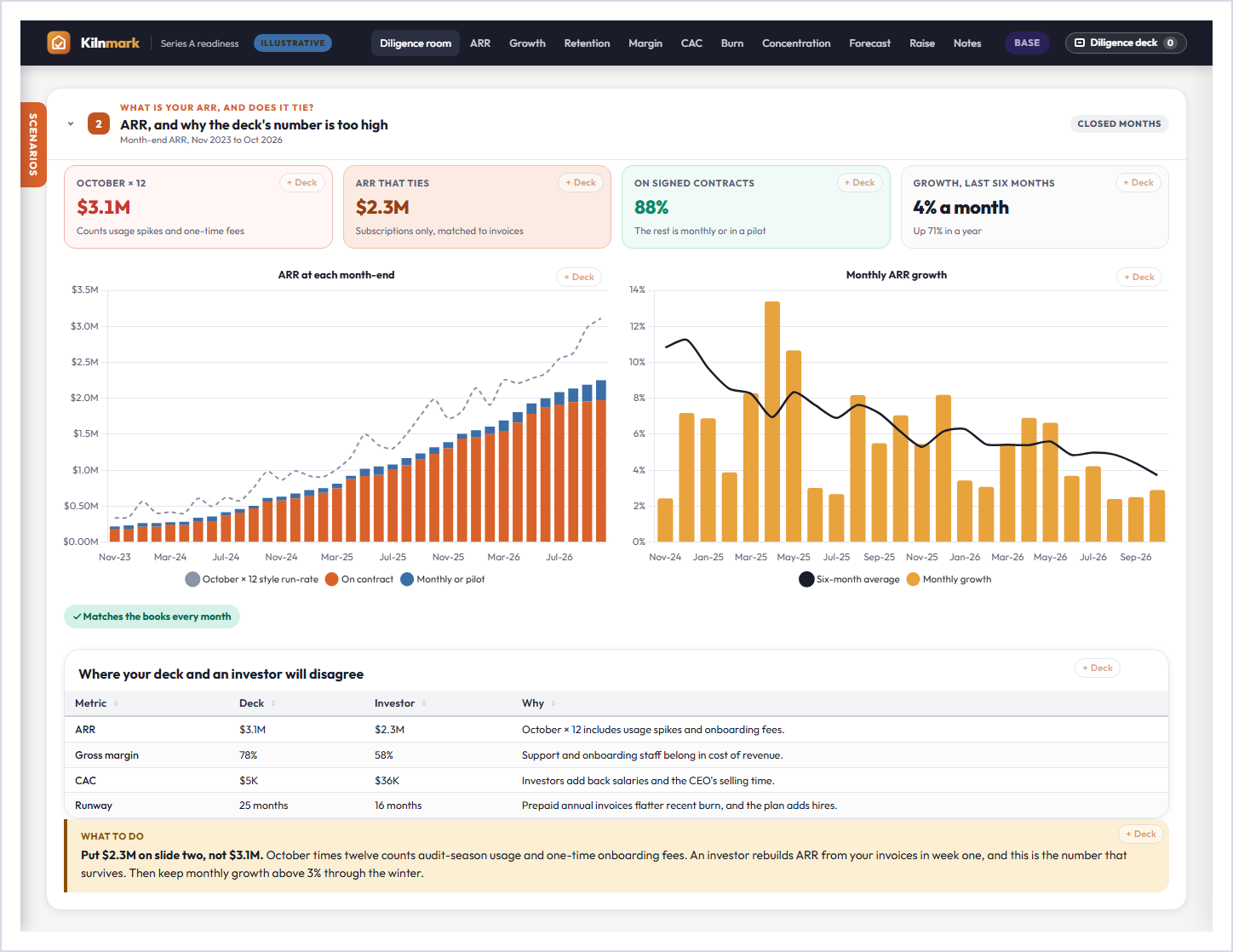
Lead with the ARR that survives
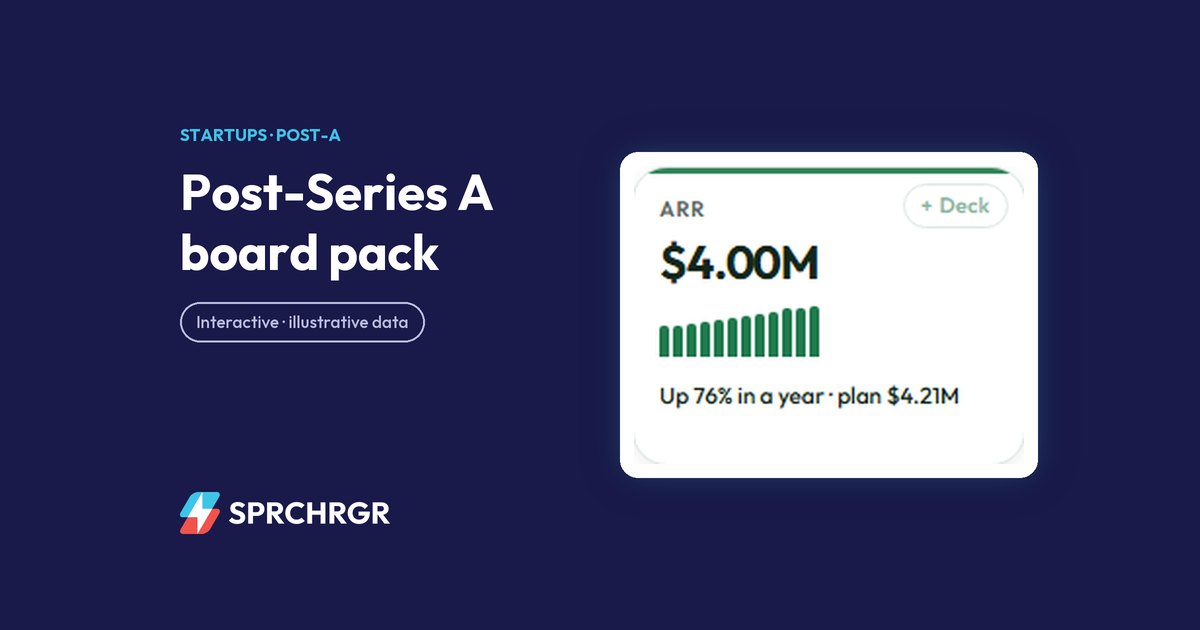
October revenue times twelve says $3.1M. October is audit season for Kilnmark's customers, so that number carries usage spikes and one-time onboarding fees. ARR that matches the invoices is $2.3M. An investor will rebuild it from your invoices in the first week anyway, so put $2.3M on slide two and save yourself the awkward correction.
Know who grew the business, by name
This is the chart I'd want in front of every founder. It walks the year from $1.3M to $2.3M of ARR and colours each step by when the customers started. Expansion added $0.7M, more than new customers did. Dravick Precision alone added five plants after passing an audit on Kilnmark's binders, and Pruett Packaging added four. Hover any bar and you see the customers behind it.
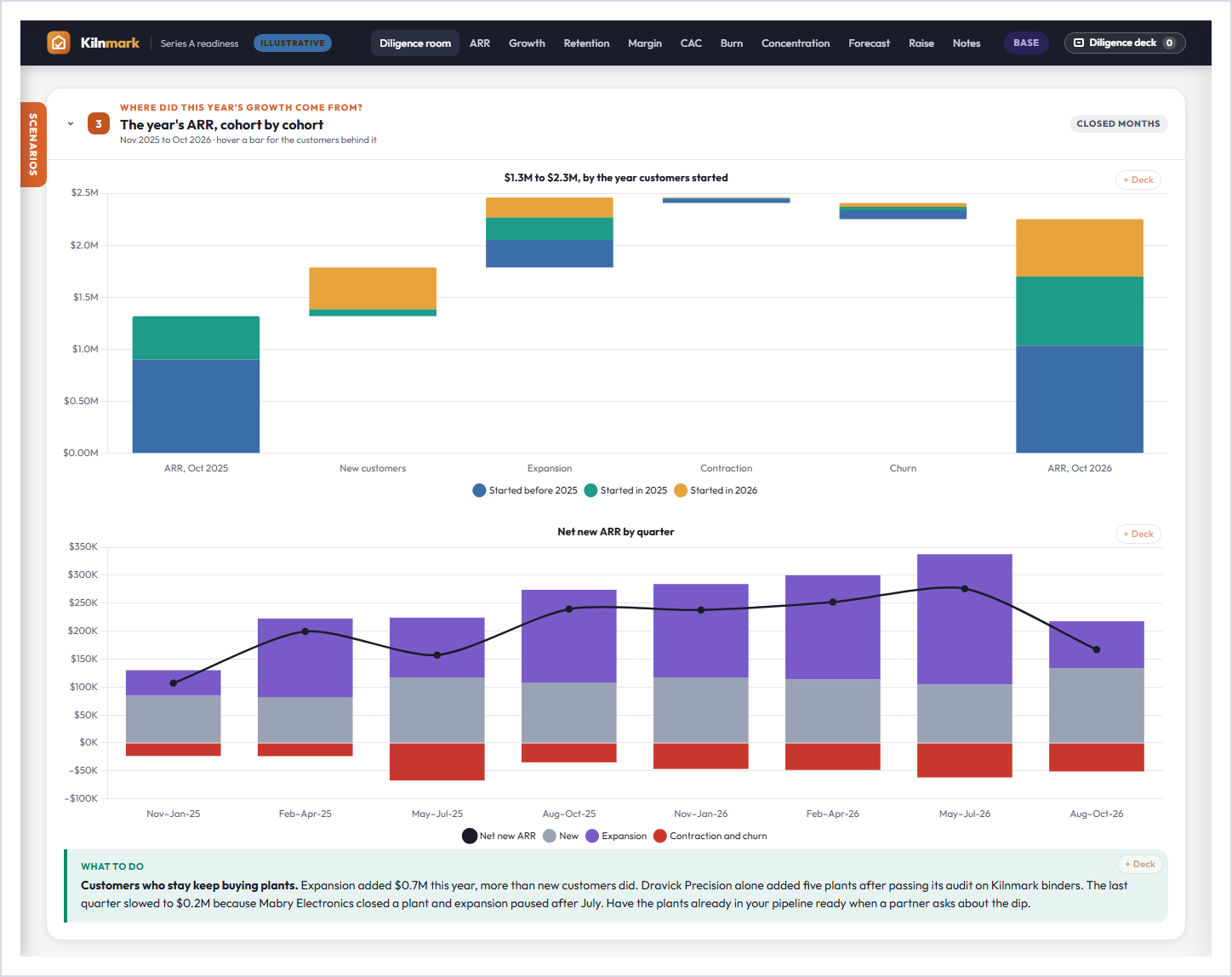
The last quarter slowed, because Mabry Electronics closed a plant and expansion paused after a big July. A partner will spot that dip. Have the plants already in your pipeline ready before they ask.
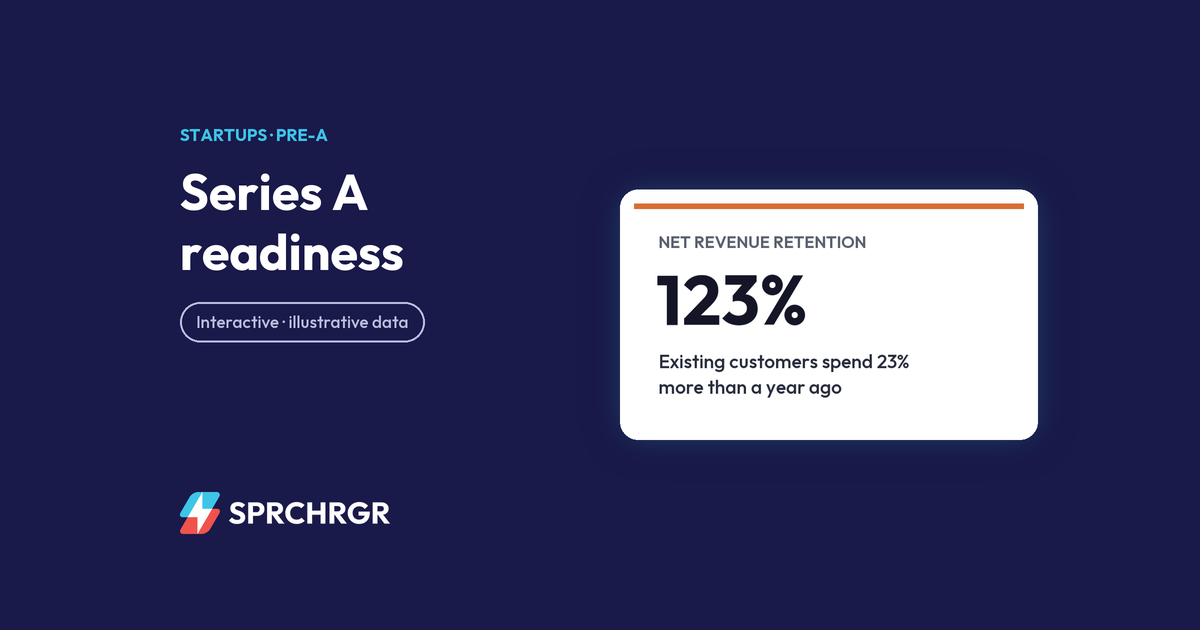
Retention backs the story up. NRR is 123% and GRR is 90%, and most of the year's churn was four pilots that never converted. The fix there is simple: one plant, a named sponsor and a signed price before day one.
Find the customer who costs too much to serve
Gross margin climbed from 51% to 58% as the AI models got cheaper. The deck had been quoting 78%, because it left out the people who onboard and support customers, and an investor will put them back.
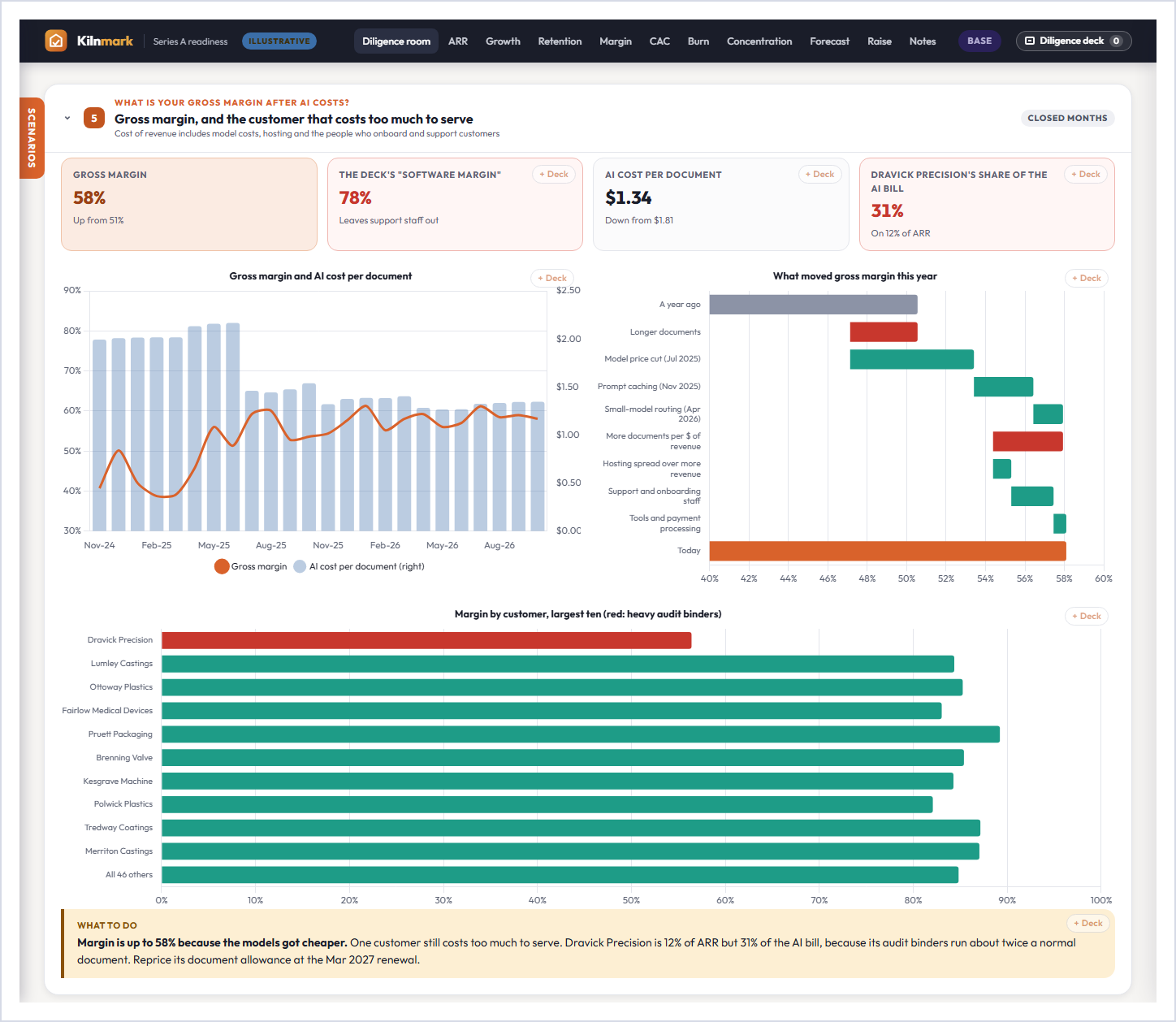
The interesting part is underneath. Dravick is 12% of ARR but 31% of the AI bill, because its audit binders run about twice a normal document. I'd reprice its document allowance at the March renewal.
Count CAC the way an investor will
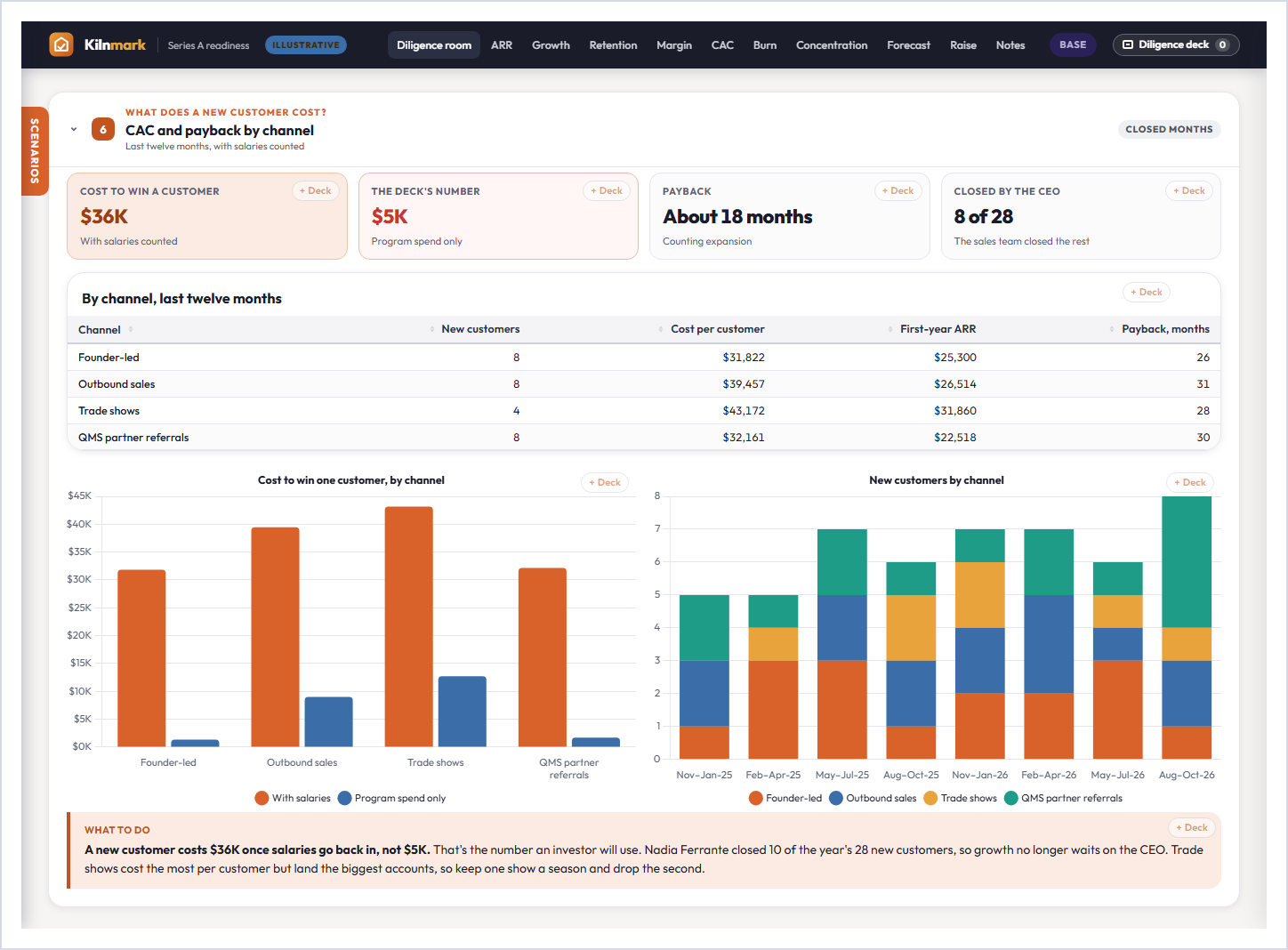
With salaries counted, a new customer costs $36K, not the $5K the program budget suggests. The better news is who's closing. One account executive closed 10 of the year's 28 new customers and the CEO closed 8, so growth no longer waits on the founder's calendar. Trade shows cost the most per customer but land the biggest accounts, so I'd keep one show a season and drop the second.
Then pick the date
Kilnmark burned $1.8M to add $0.9M of ARR, a burn multiple of about 1.9x, which is fine for an A. Burn held flat through five hires because revenue grew faster.
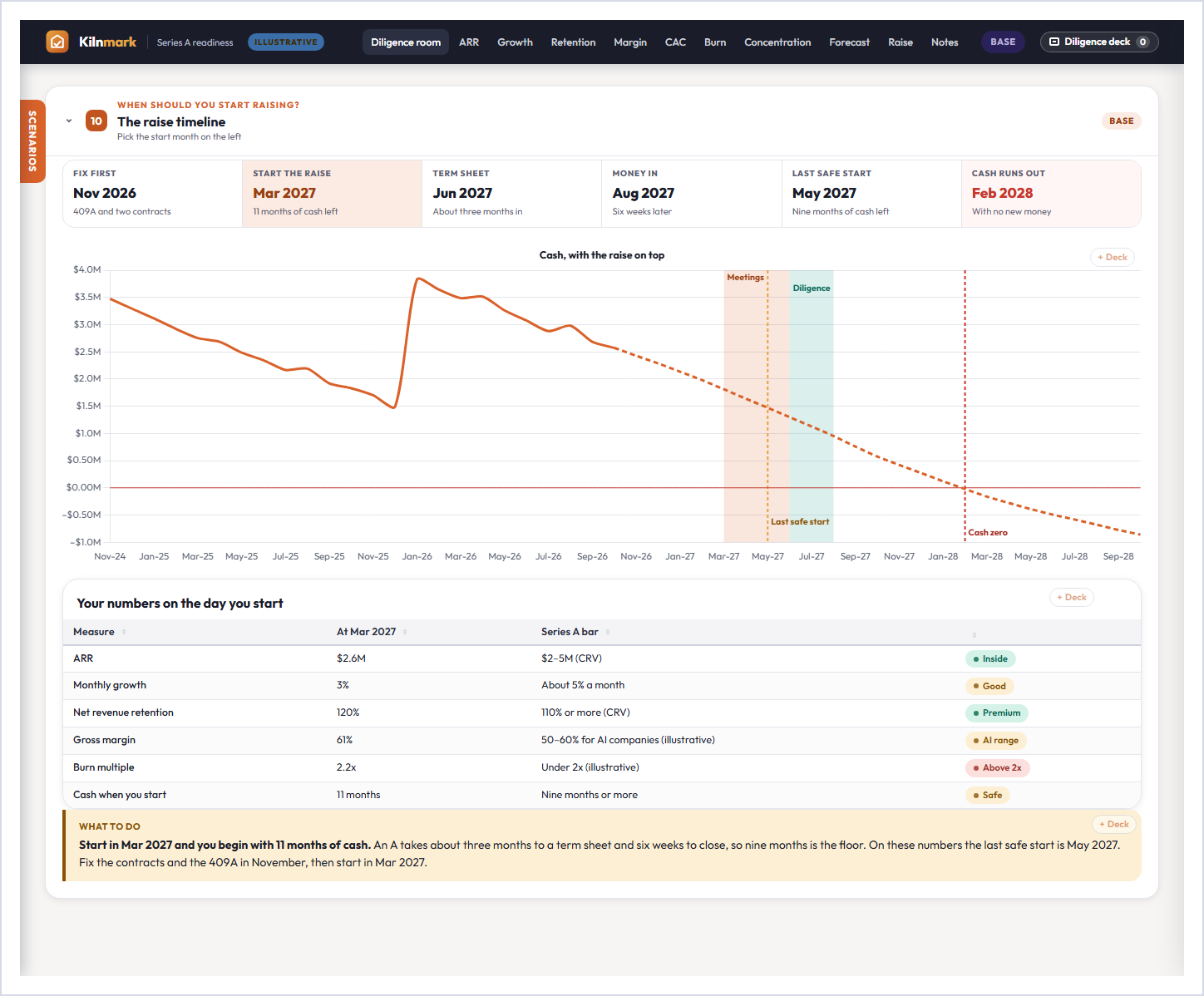
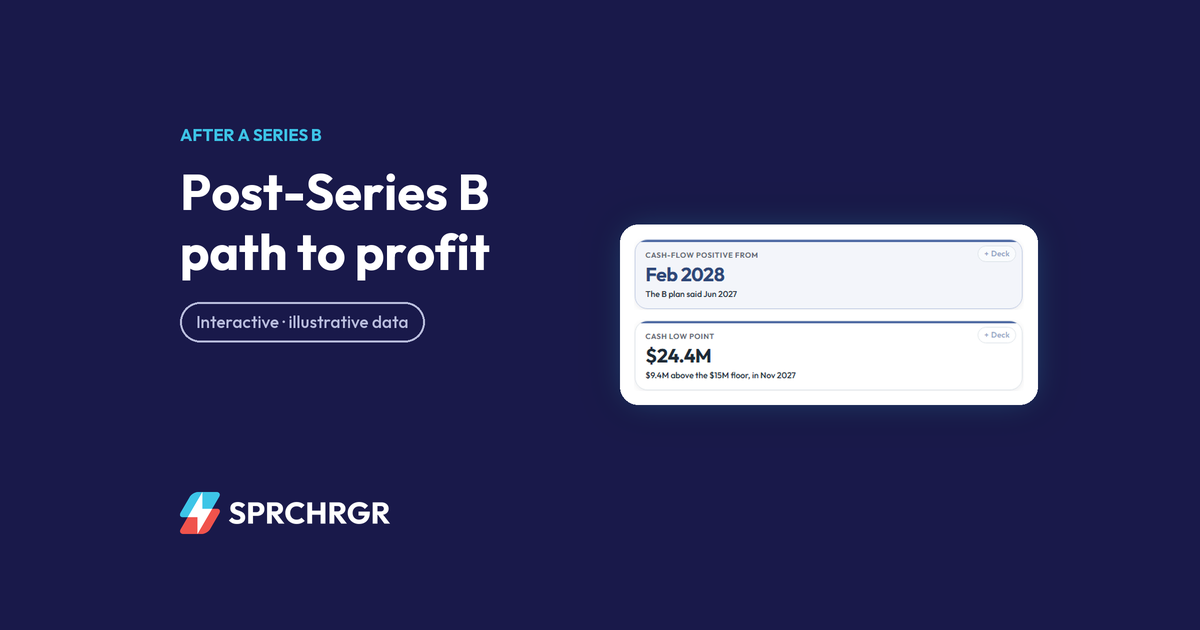
On the plan, cash runs out in February 2028. An A takes about three months to a term sheet and six weeks to close, and I never want a founder starting with less than nine months of cash, so the last safe start is May. I'd start in March, with eleven months in the bank – early enough that a slow process doesn't turn your bank balance into a negotiating point. The forecast on the left rail lets you test the downside, which pulls cash-zero in to November 2027.
What it takes to get this on your own numbers
We connect read-only to your billing system, contracts, CRM and books, rebuild ARR customer by customer, and keep the whole room current at every month-end close. Your data stays somewhere secure that you control, and a CFO stands behind what it means.
That's CFOptimize for Startups. If you'd like to walk into Series A diligence already built, book your free Series A readiness review and we'll run the same checks on your numbers, plus a review for R&D tax credits. Backed by one of our VC partners? Ask about partner perks.
Mark
Kilnmark is a fictional company, and every customer, person and figure in the dashboard and in this post is invented for illustration. Nothing here is drawn from any client's books. Benchmarks are labelled and illustrative, and nothing here is tax, legal or investment advice.
Share