CEOs in the year after a Series A, and the investors and advisors who sit on their boards.
How the business is really doing against the plan you sold, what that means for cash and runway, when to start the B and what you'll be worth when you do, and what you need from your board.
Open the interactive dashboard · built on a fictional company with invented numbers
You just closed an A, the team is doubling, and the first real board meeting is three weeks out. I've sat on both sides of that table a few times, and the founders who do well in that meeting can say in a couple of minutes how the business is doing, what it means for the cash, and what they need from the people in the room.
So here's how I'd walk a first-time CEO through that pack, using a working sample dashboard for a fictional company called Wattmere. It sells sensor kits and energy software to owners of office buildings: about $11K of hardware per building up front, plus about $7K a year of software. Five months past a $14M Series A, 49 people. Every number is invented, but I've seen this exact situation more than once.
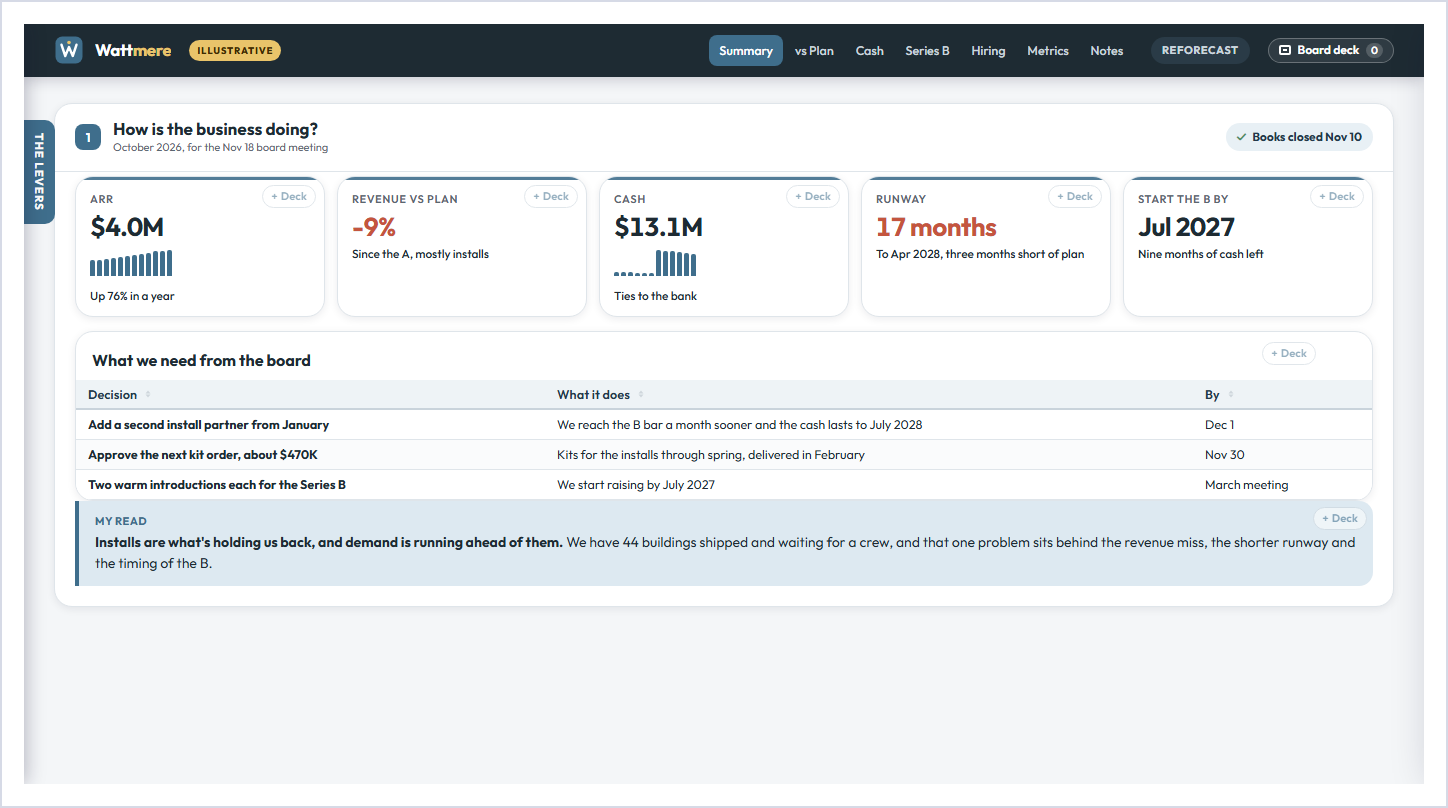
Open with five numbers and three asks
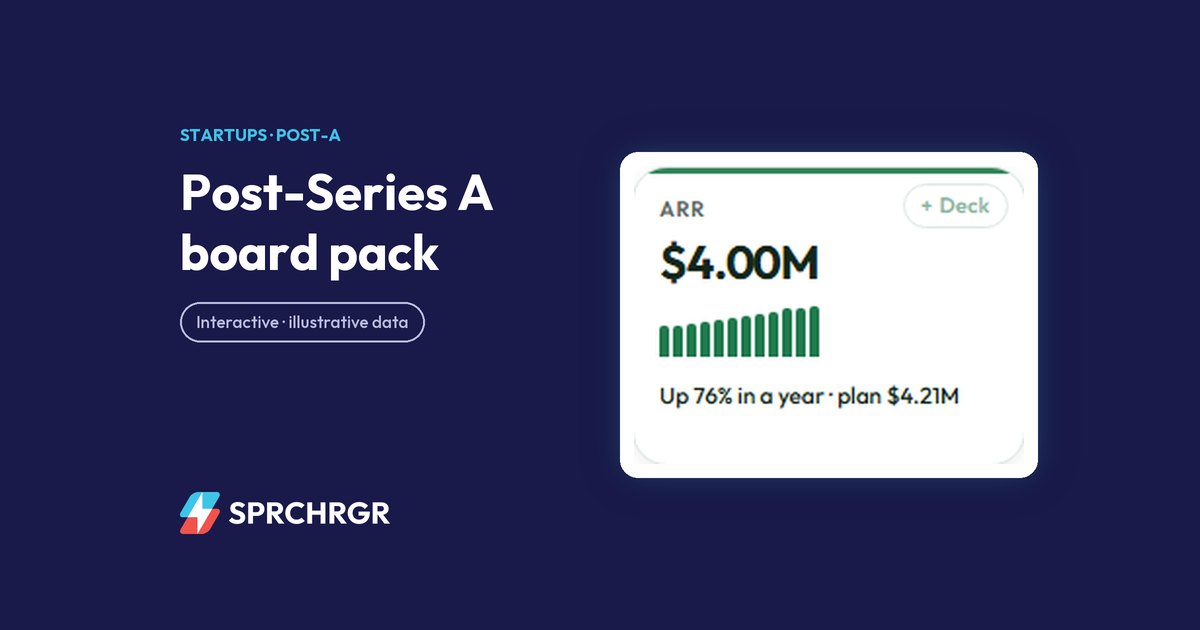
The first screen is what I'd want a board member to read before the meeting: ARR at $4.0M and up about three quarters in a year, revenue 9% behind plan since the A, $13.1M in the bank, about 17 months of runway, and the date we need to start raising the B. Under that, the three decisions we need from them, each with a date.
That's the whole meeting, really. Everything after it is the backup for when someone asks why.
Show what moved, and make the board click for the detail
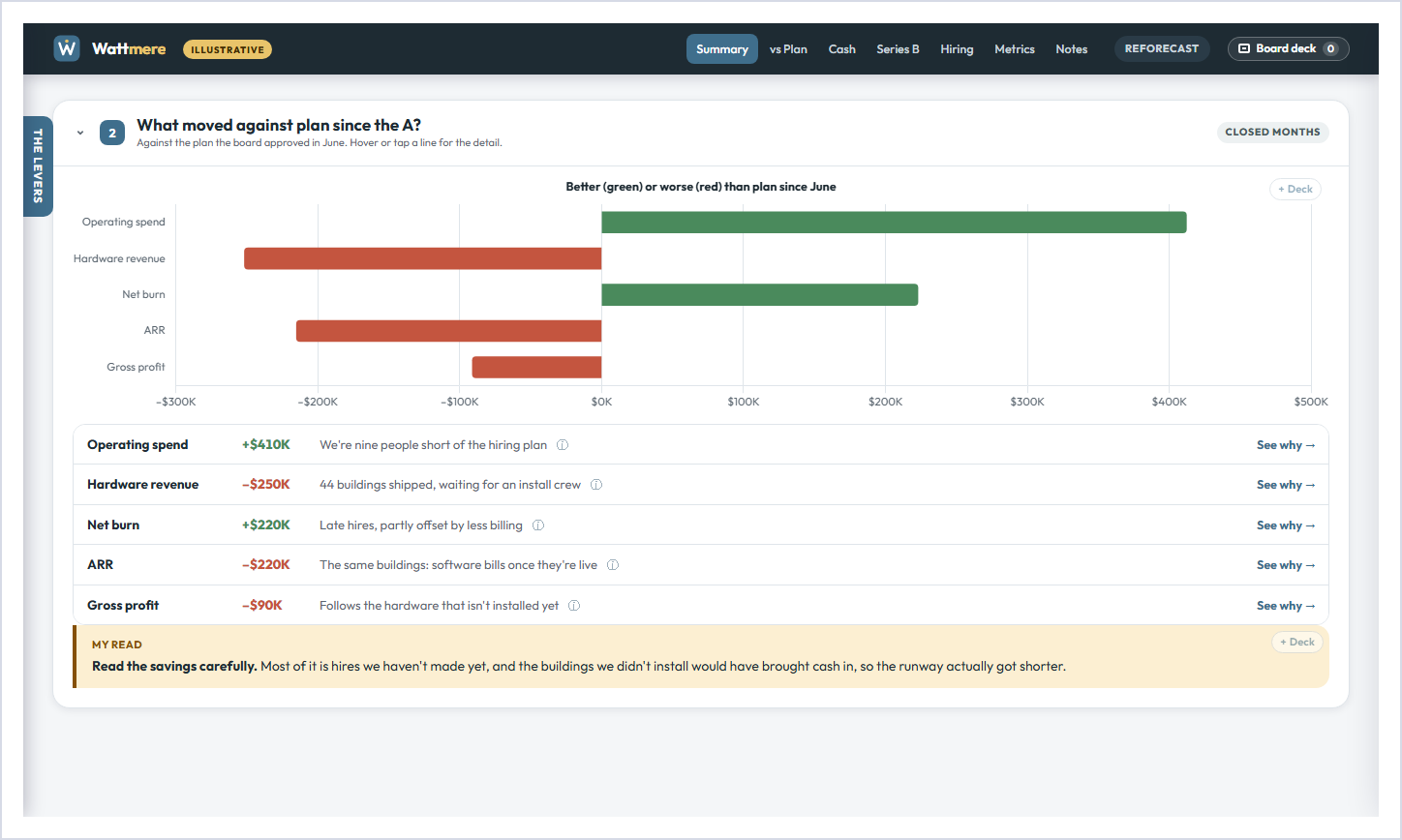
Most first board packs I see have a full P&L with a variance column and a paragraph per line, and nobody reads it. Here it's five bars – better or worse than plan since June – and one line each saying why. Hover or tap a line for the numbers, or jump to the part of the pack that explains it.
The interesting thing is what the bars say together. Wattmere spent about $410K less than planned, and net burn is about $220K better than plan. A board member who stops there will tell you you're running a tight ship. But most of that saving comes from being nine people short of the hiring plan, and hardware revenue is $250K behind because 44 buildings are shipped and sitting on site waiting for an install crew.
Then show what it means for cash
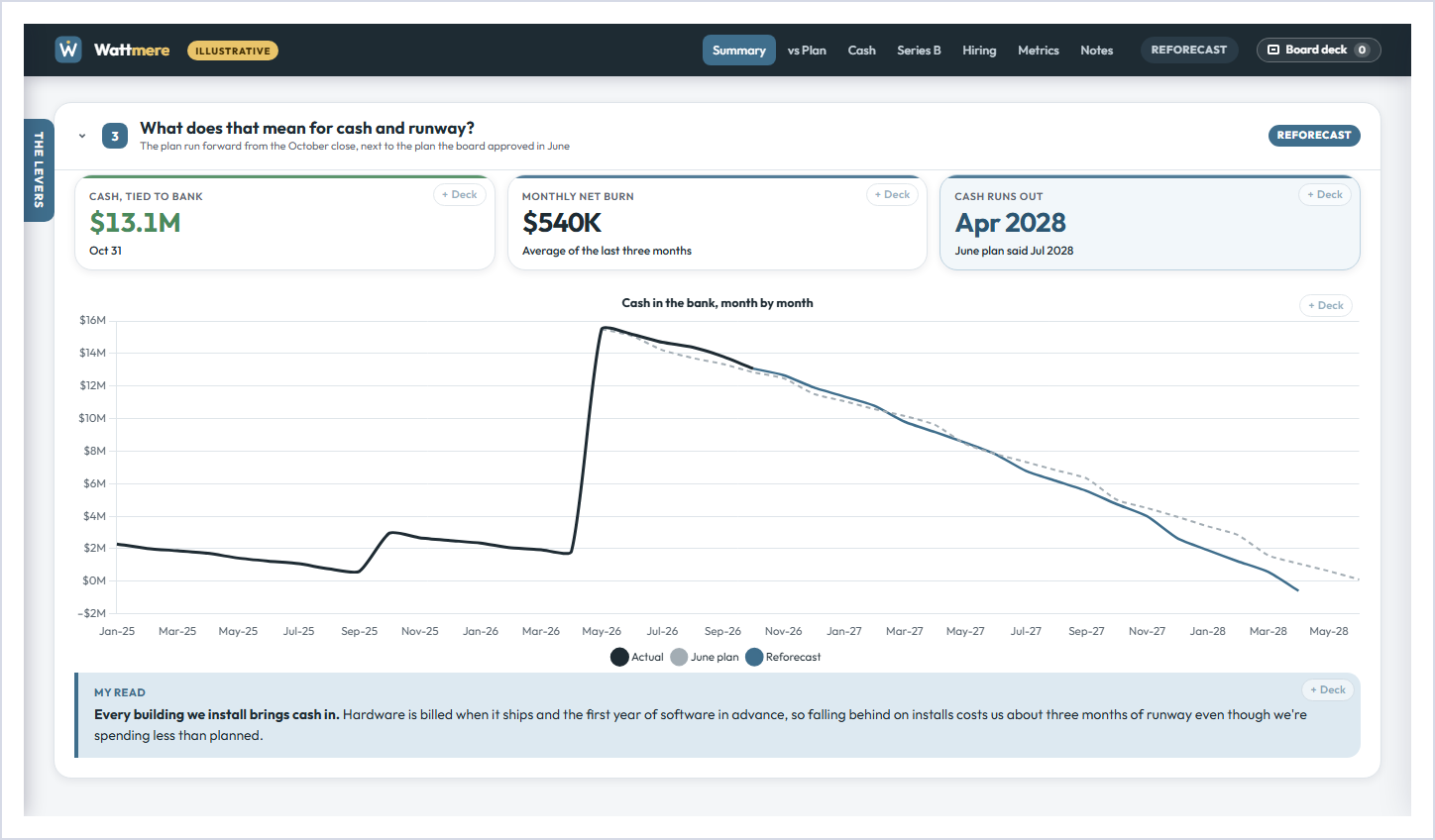
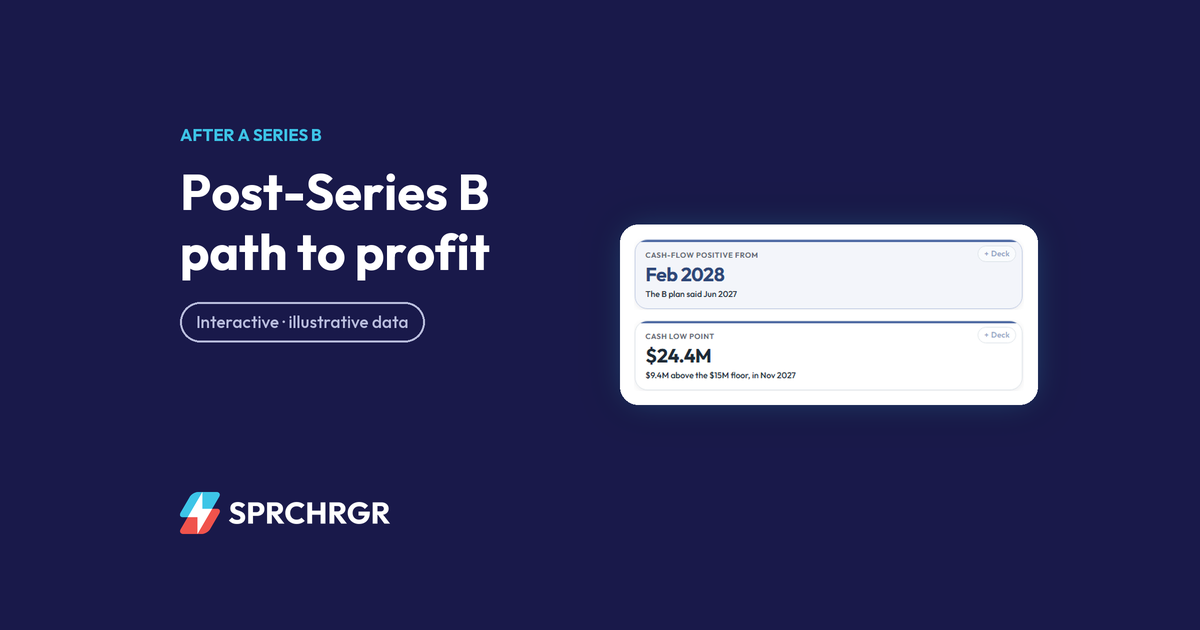
This is the part a first-time CEO usually misses. In this business every building we install brings cash in, because the hardware is billed when it ships and the first year of software is billed in advance. So being behind on installs costs runway, even while we're spending less. Run the plan forward from the October close and the cash lasts to April 2028, about three months sooner than the plan we showed the board in June.
You want to be the one who says that out loud, in November, with a fix attached. The alternative is your lead investor working it out for themselves in March.
Tie it to the raise and to what you're worth
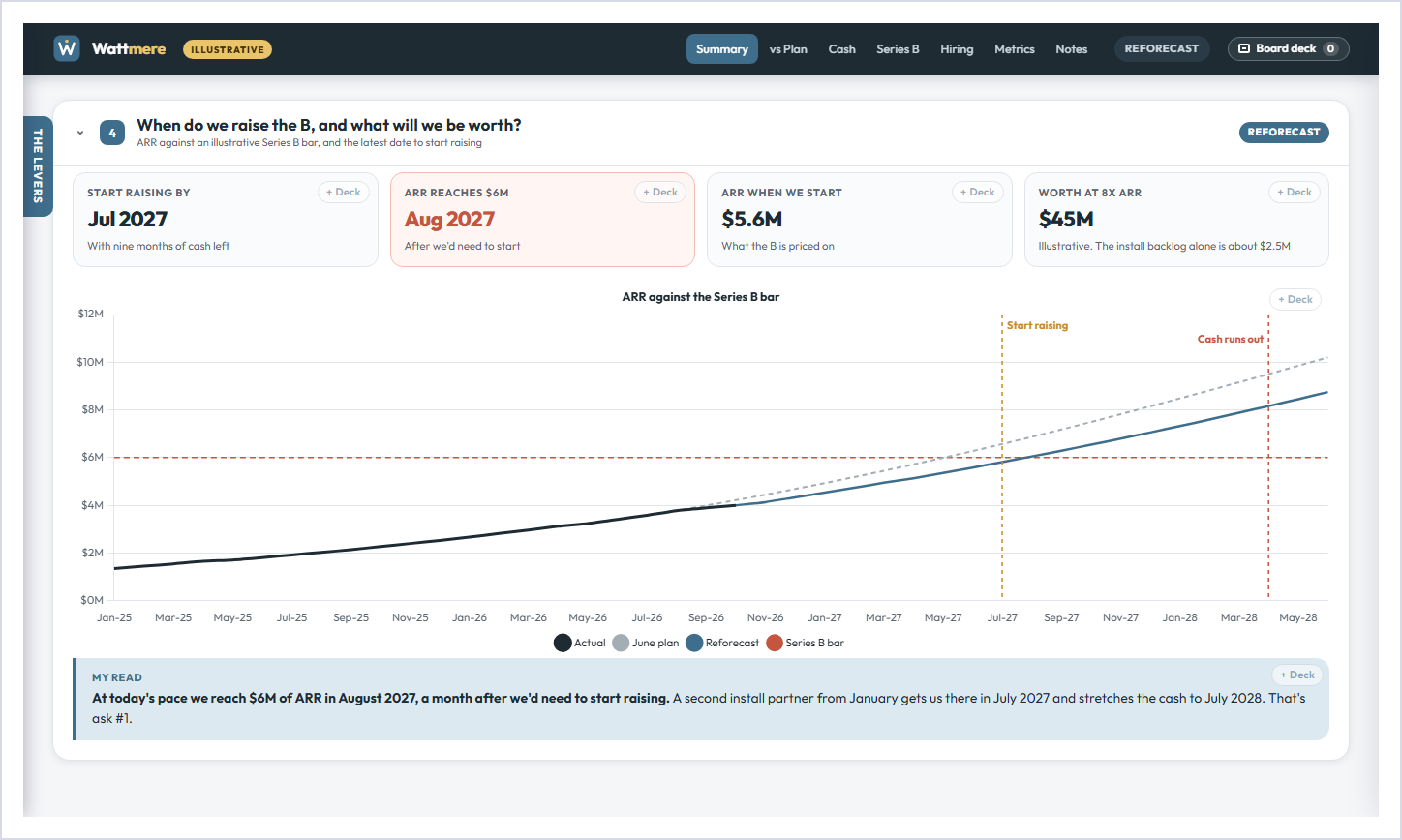
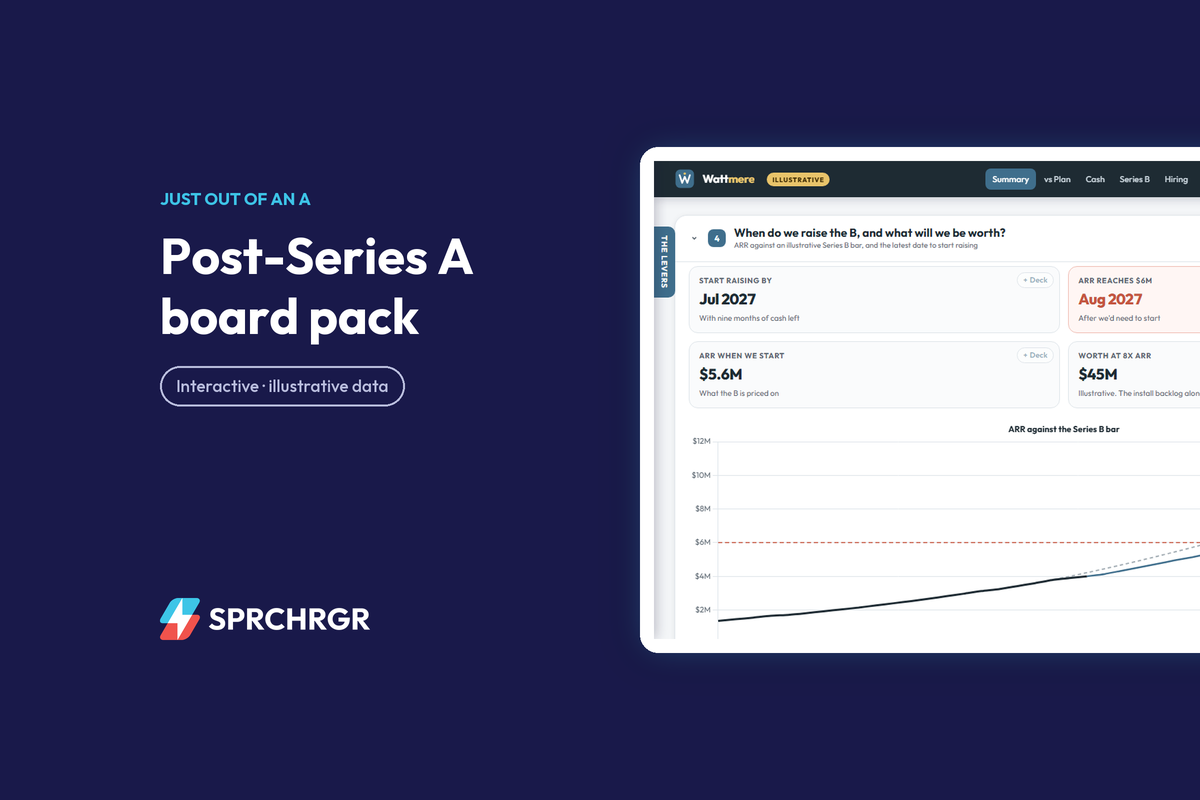
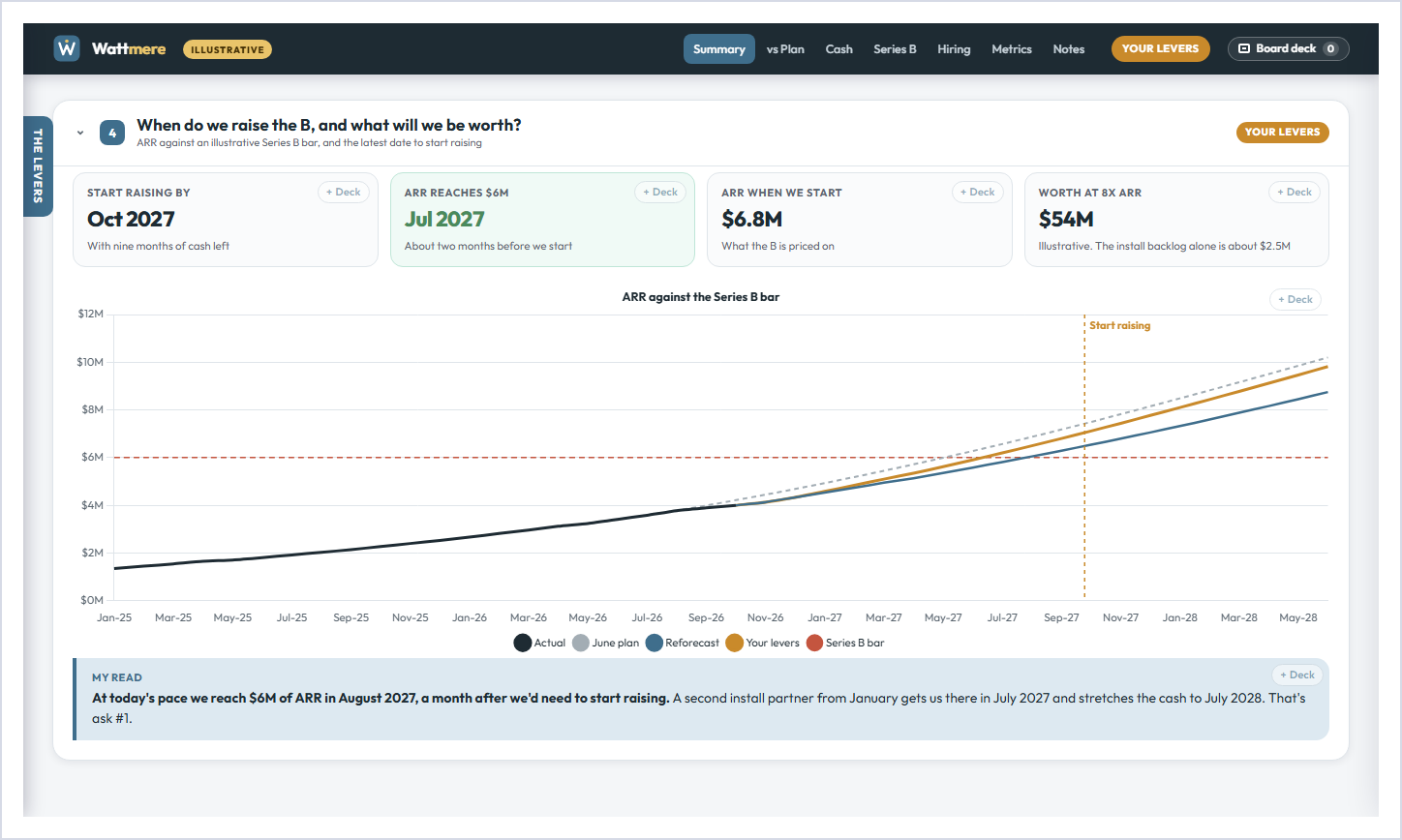
Boards think in rounds, so I'd put the B on the same page. We start raising with nine months of cash left, which puts the start date at July 2027. At today's install pace, ARR reaches $6M in August 2027, a month after we'd need to be out raising. That's cutting it close, and the install backlog alone is about $2.5M of value at an illustrative 8x ARR.
The levers on the left let you test the fix live in the meeting. Add a second install partner from January and the bar comes a month sooner and the cash stretches to July 2028. That's ask #1, and it's the only one of the three worth a real debate.
Keep hiring simple to read
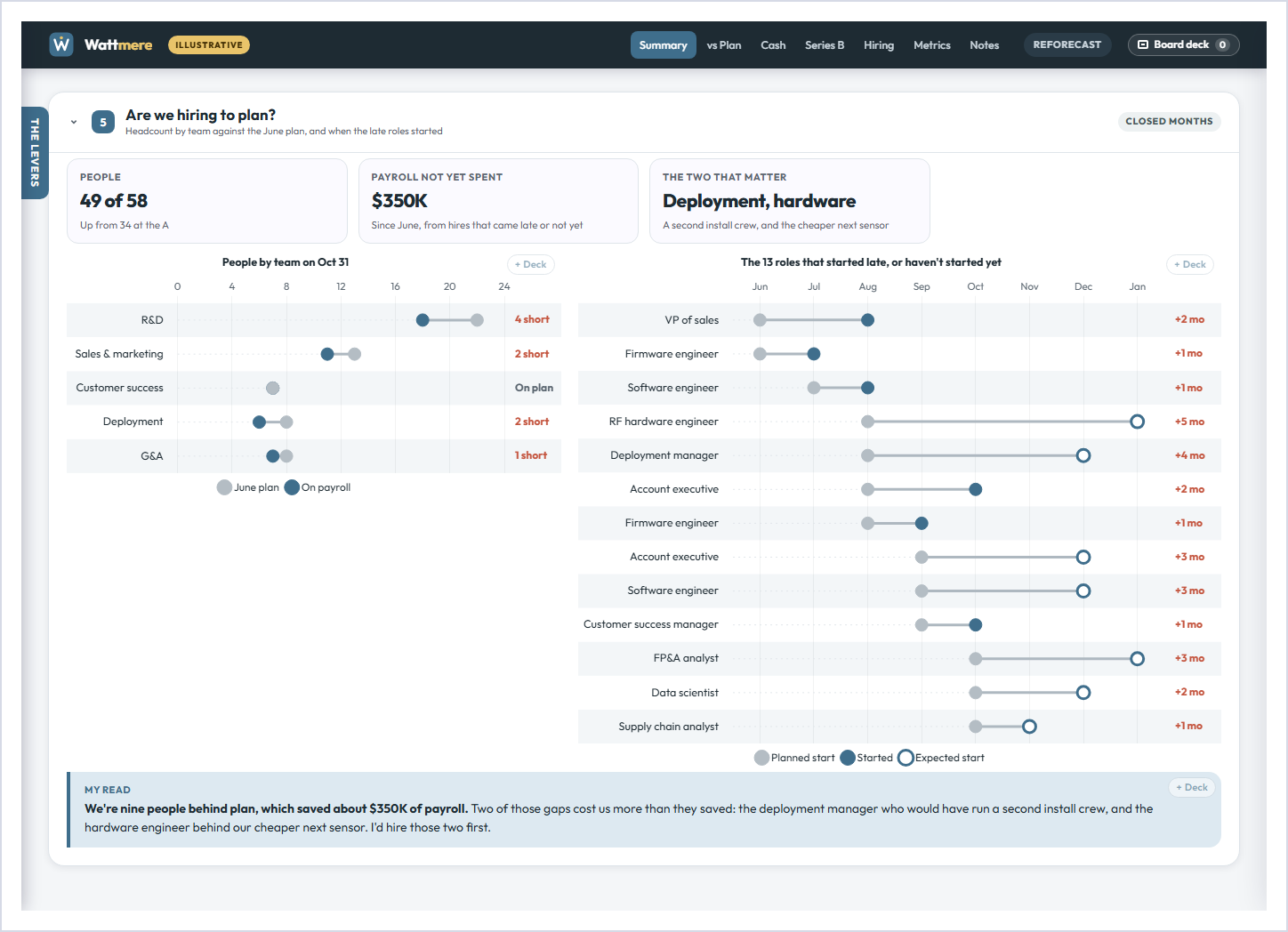
Hiring gets two simple charts: each team's headcount against plan, and for each late role, when we planned to start them and when they actually started (or will). Wattmere is nine people short, which saved about $350K of payroll. I'd tell the board that plainly and then point at the two gaps that cost more than they saved – the deployment manager who would have run that second install crew, and the hardware engineer working on a cheaper next sensor. Hire those two first.
Get the Series A numbers right before the next investor does
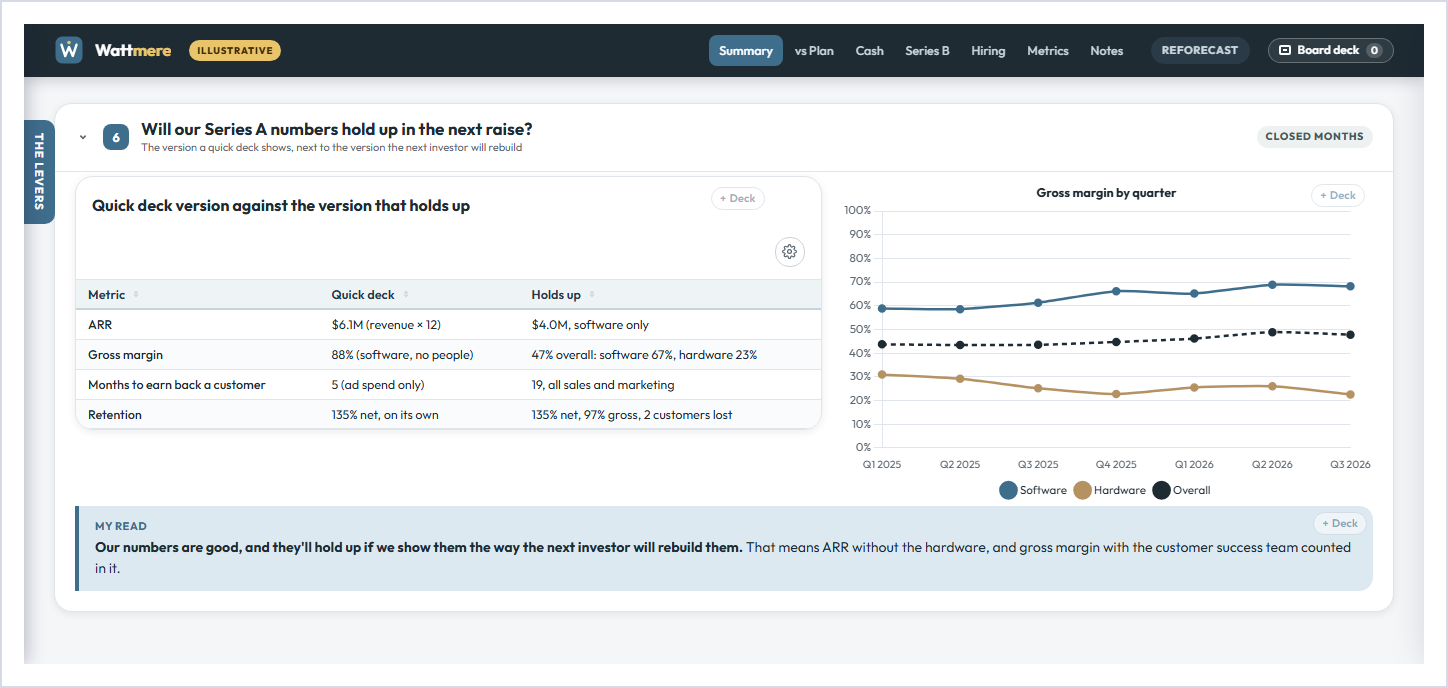
The next investor will rebuild your numbers from your billing data, so show them the way they'll come out. ARR is the $4.0M of software; revenue times twelve would say $6.1M. Gross margin is about 47% overall once you count the customer success team and split out the hardware, where a quick deck would show an 88% "software margin". Net revenue retention of 135% is real, but it's mostly owners adding buildings, so show gross retention (97%) next to it.
The books themselves get one line at the bottom: closed and reconciled on November 10, cash tied to the bank, and seven of twelve audit items ready. The board needs to know the numbers are solid, and that line tells them.
What it takes to get this on your own numbers
We connect read-only to your bank, accounting system, payroll, billing and inventory, close the books every month, and the pack builds itself from that close: what moved and why, what it means for runway, when to start your next round, and the decisions you need. It goes out the week the books close.
That's CFOptimize for Startups, a fractional CFO sized for seed through Series B. It starts with a free board-pack review on your own numbers, plus a look at R&D tax credits. If you want to send the next board pack without the scramble, book your free board-pack review. Backed by one of our VC partners? Ask about partner perks.
Mark
Wattmere is a fictional company, and every customer, person and figure in the dashboard and in this post is invented for illustration. The Series B bar, the valuation multiple and the install capacities are illustrative round numbers, not market quotes, and nothing here is investment, legal or tax advice.
Share